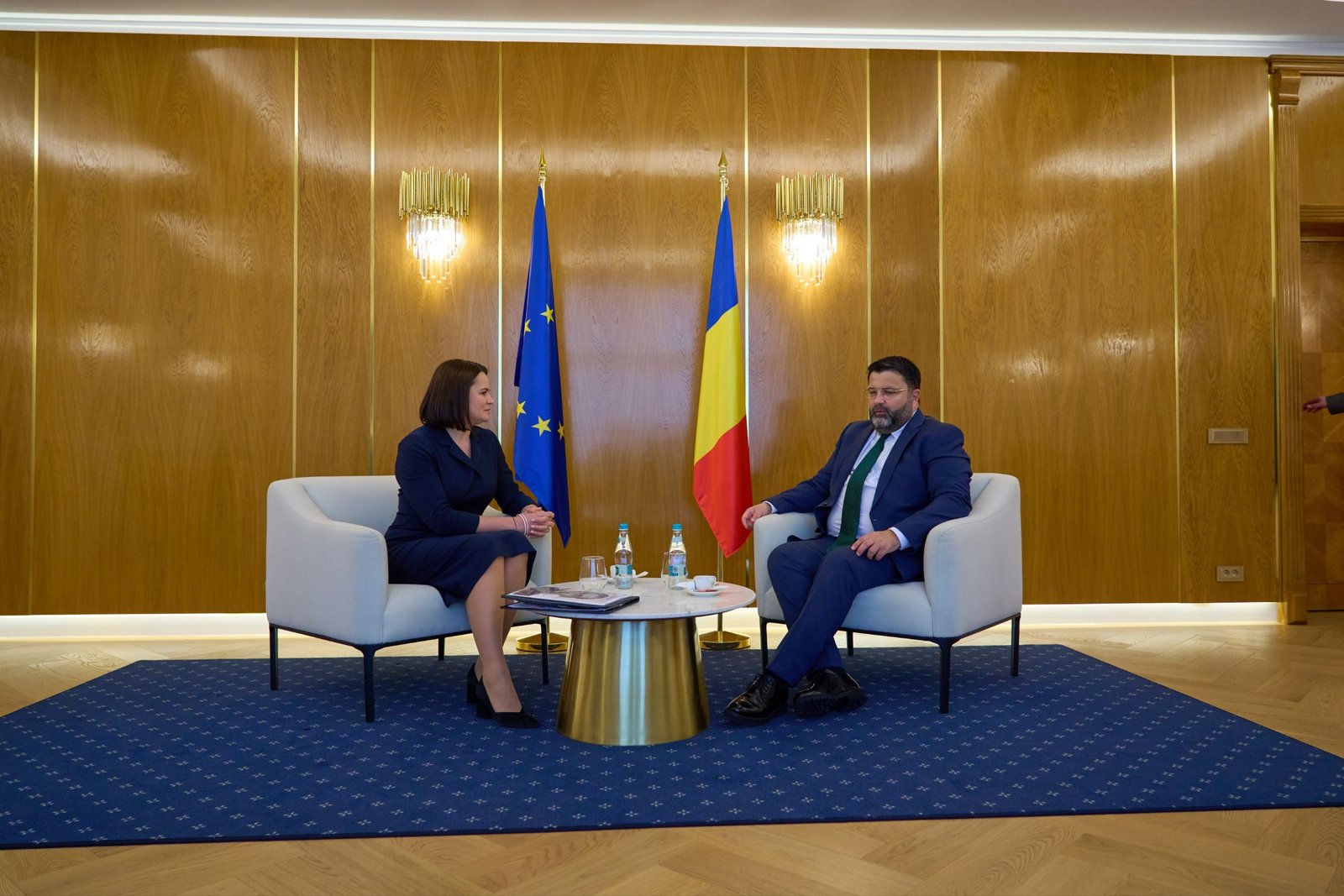


On November 4, Sviatlana Tsikhanouskaya met with Romania’s Minister of Foreign Affairs, Dan Năculescu, in Bucharest. The meeting took place as part of her visit to the Romanian capital.
Romania’s former Ambassador to Belarus, Viorel Moșanu, also took part in the meeting. He served in Minsk in 2020 and, together with other European diplomats, visited Nobel laureate Sviatlana Alexievich to express their support and solidarity.
Ms. Tsikhanouskaya congratulated Minister Năculescu on his appointment, which he took up last week, and thanked Romania, through him, for its consistent support for the Belarusian people, solidarity with political prisoners, support for EU policy, and educational and humanitarian programs. She also highlighted the support provided by Romanian diplomats and the Romanian Embassy in Vilnius.
The meeting covered:
- visas for Belarusians. Sviatlana Tsikhanouskaya called on Romania to expand the issuance of Schengen visas to Belarusian citizens;
- rehabilitation for political prisoners and their families. She proposed that Romania join the International Humanitarian Fund that supports Belarus’s political prisoners and repressed individuals, support medical and psychological rehabilitation programs for former political prisoners, and provide health and recreation programs for the children of political prisoners and Belarusians affected by repression;
- Belarus’s participation in the Central European Initiative. With Romania holding the CEI Presidency, Ms. Tsikhanouskaya proposed inviting representatives of Belarus’s democratic forces to its events. The participation of official Minsk in the organization has been suspended since 2022;
- appointment of a special representative for Belarus. Ms. Tsikhanouskaya proposed that Romania appoint a special representative to liaise with Belarus’s democratic forces and coordinate cooperation on a regular basis;
- EU strategy on Belarus and sanctions policy. The sides discussed the need for a long-term European strategy aimed not only at securing the release of political prisoners but also at achieving systemic democratic change in Belarus. They also addressed continued sanctions pressure on the Lukashenka regime and international accountability mechanisms;
- cooperation with Ukraine and peace negotiations. The sides discussed support for Ukraine, coordination with Ukrainian partners, and the need to include the Belarusian issue in any potential negotiations to ensure a lasting peace;
- support for Belarusian culture and translators of Romanian literature. The sides explored ways to support translators who introduce Romanian literature to Belarusian readers. Ms. Tsikhanouskaya mentioned translator Dzmitry Kolas, who translated works by Eugène Ionesco into Belarusian and was released from political imprisonment thanks to efforts by the US administration, with Romania’s support.
Sviatlana Tsikhanouskaya called for cooperation on regional security, countering Russian hybrid threats, and supporting independent Belarusian media and civil society. She noted that Romania’s experience of moving from dictatorship to EU membership is particularly valuable in preparing for democratic transformation in Belarus.
Sviatlana Tsikhanouskaya: “Romania knows all too well what dictatorship means and the price people pay for freedom. Your country has gone through difficult changes and become part of a united Europe. I believe Belarus will follow the same path.
But it is not enough for us to free people from prison. We need to free our country from dictatorship and dependence on Russia and restore Belarusians’ right to decide their own future.
I am counting on Romania as our partner — today, as we fight for freedom, and tomorrow, as we build a new democratic Belarus”.