

EUROPEAN POLITICAL COMMUNITY SUMMIT
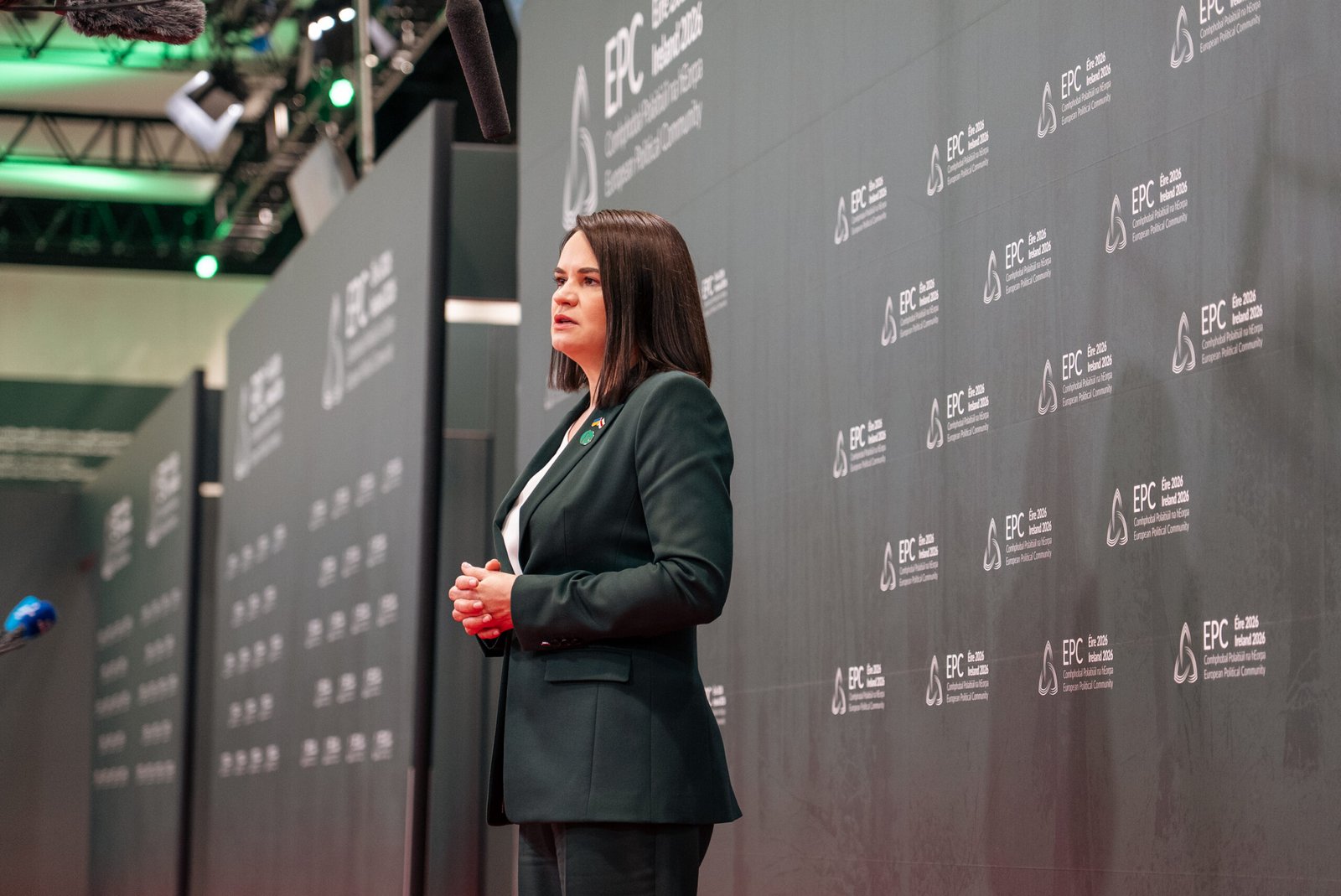
On November 12, Sviatlana Tsikhanouskaya took part in the European Political Community Summit in Dublin, where she held dozens of conversations with European and world leaders.
Irish Prime Minister Micheál Martin personally welcomed her at the start of the event, which brought together presidents, prime ministers, and other senior representatives of European countries.
Before the summit began, Ms. Tsikhanouskaya delivered opening remarks, outlining the three key messages she had come to convey:
- Ukraine needs a just and lasting peace;
- Belarus must be discussed during peace negotiations;
- International pressure on the Lukashenka regime must continue to secure the release of political prisoners.
On the sidelines of the summit, Sviatlana Tsikhanouskaya met and held talks with:
- Ursula von der Leyen, European Commission President;
- Volodymyr Zelenskyy, Ukrainian President;
- Péter Magyar, Hungarian Prime Minister;
- Irakli Kobakhidze, Georgian Prime Minister;
- Mark Carney, Canadian Prime Minister;
- Giorgia Meloni, Italian Prime Minister;
- Andrej Babiš, Czech Prime Minister;
- Kristen Michal, Estonian Prime Minister;
- Andris Kulbergs, Latvian Prime Minister;
- Andrej Plenković, Croatian Prime Minister;
- Nikol Pashinyan, Armenian Prime Minister;
- Andy Burnham, UK Prime Minister;
- Feridun Sinirlioğlu, OSCE Secretary General;
- Nikos Christodoulides, Cypriot President;
- Gitanas Nausėda, Lithuanian President;
- Micheál Martin, Irish Prime Minister;
- António Costa, European Council President;
- Roberta Metsola, European Parliament President;
- Alain Berset, Council of Europe Secretary General;
- Donald Tusk, Polish Prime Minister;
- Ararat Mirzoyan, Armenian Foreign Minister;
- Maia Sandu, Moldovan President;
- Janez Janša, Slovenian Prime Minister;
- Þórdís Kolbrún Reykfjörð Gylfadóttir, former Icelandic Foreign Minister;
- Rumen Radev, Bulgarian Prime Minister.
During the summit, Sviatlana Tsikhanouskaya recorded a video address about the issues she had raised in meetings with European leaders and why it matters that the voice of a free Belarus is heard across Europe: “For years, propaganda has tried to convince us that Europe is our enemy. But time and again, I see that Belarusians have allies here who are ready to support us. And this support must translate into concrete decisions that help Belarusians both inside the country and abroad. Our strength still lies in solidarity and mutual support, no matter what”.
VISIT TO BERLIN
On November 9, Sviatlana Tsikhanouskaya visited Berlin, where she met with German politicians, took part in international events, and met with the Belarusian community in Germany.
- Meeting at the Bundestag. Sviatlana Tsikhanouskaya and Anatoli Liabedzka met with Bundestag Member Knut Abraham, who chairs the “For a Democratic Belarus” Parliamentary Group in Germany. They discussed a new resolution on Belarus, new internship opportunities for young Belarusians in 2027, parliamentary cooperation, and challenges facing Belarusians in Germany.
- Talks at the Federal Foreign Office. With State Secretary Géza Andreas von Geyr, Sviatlana Tsikhanouskaya discussed maintaining pressure on the regime, EU-level strategy, regional security, assistance for former political prisoners, and documents and residency issues facing Belarusians. She proposed appointing a special envoy for Belarus.
- Freedom and Security Women Summit. Ms. Tsikhanouskaya spoke during the closing discussion alongside German Bundestag President Julia Klöckner, French National Assembly President Yaël Braun-Pivet, and Iranian human rights activist Masih Alinejad. She spoke about the role of Belarusian women in the 2020 protests and called for support for women who continue to fight for freedom.
- Meeting with Belarusians in Berlin. Ms. Tsikhanouskaya spoke with the Belarusian community about life in Germany and the challenges they face, and heard their suggestions. The event was organized by RAZAM and Libereco.
Ms. Tsikhanouskaya also took part in a closed-door roundtable on transnational repression, organized by Freedom House and the German Marshall Fund. She also signed postcards to political prisoners as part of Libereco’s initiative.
MEETING WITH RUSLANAS BARANOVAS
On November 11, Director of Sviatlana Tsikhanouskaya’s Office in Vilnius, Dzianis Kuchynski, and Sviatlana Tsikhanouskaya’s Advisor on Constitutional Reform and Parliamentary Cooperation, Anatoli Liabedzka, met with the Head of the Lithuanian Seimas Group “For a Democratic Belarus”, Ruslanas Baranovas.
- driver’s licenses and possible solutions for the recognition and exchange of Belarusian driver’s licenses for European ones;
- support for families, including financial assistance for Belarusian families raising children with disabilities;
- new projects like a School of Parliamentary Studies, expert meetings with Seimas members, and initiatives to engage Belarusians in local election campaigns in Lithuania.
- international cooperation and joint work in the Parliamentary Assembly of the Council of Europe and the OSCE Parliamentary Assembly, as well as plans for Lithuania’s 2027 Presidency of the Council of the EU.
MEETINGS WITH SERHII CHEREVATYI AND IAROSLAV CHORNOGOR
On November 9, Head of the Mission of the Democratic Forces of Belarus in Kyiv, Volha Zazulinskaya, held meetings with Director General of the Ukrinform News Agency, Serhii Cherevatyi, and Ambassador-at-Large at Ukraine’s Ministry of Foreign Affairs, Iaroslav Chornogor. They discussed opportunities for cooperation in strategic communications, youth initiatives, cultural diplomacy, cooperation between the Mission and BELPOL, and ways to bring together their expertise to support Ukraine.
ANNIVERSARY OF RAMAN BANDARANKA’S KILLING
On November 12, Sviatlana Tsikhanouskaya addressed Belarusians on the anniversary of Raman Bandarenka’s killing: “We remember Raman. His face and his words: ‘I’m going out’. We remember what was done to him and how difficult this has been for his loved ones. And we remember how many questions still remain unanswered.
We will continue to demand a genuine investigation and accountability for everyone involved in his death. Because no matter how much time has passed, we still need justice. Six years of silence cannot erase the crime or the responsibility for it”.