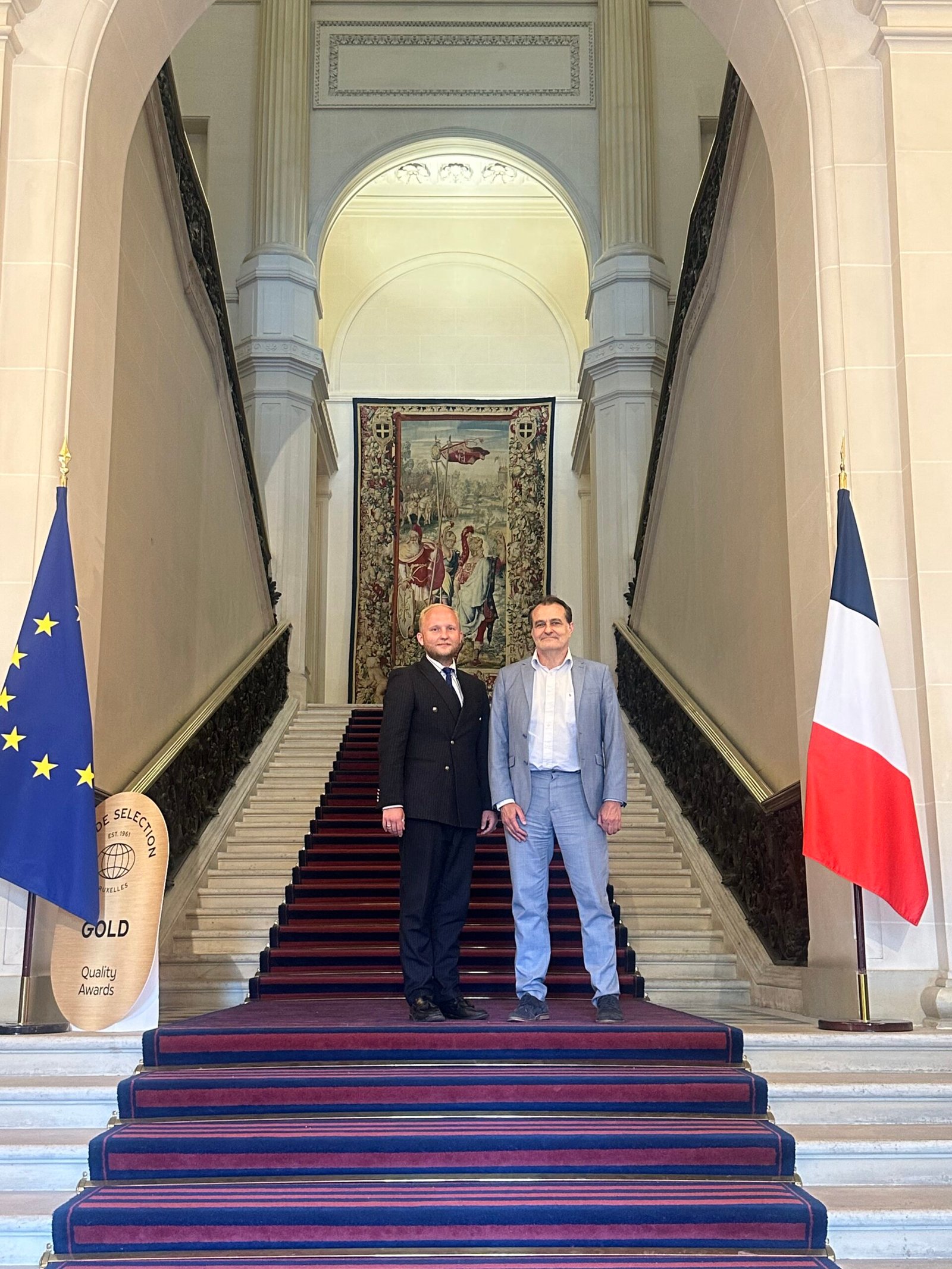




Sviatlana Tsikhanouskaya’s Diplomatic Advisor, Dzianis Kuchynski, visited Paris, where he held a series of meetings with senior representatives of the French President’s Office at the Élysée Palace, the Ministry for Europe and Foreign Affairs, and the National Assembly.
He met with:
- Bertrand Buchwalter, Advisor to President Emmanuel Macron on Continental Europe and Türkiye;
- Brice Roquefeuil, Head of the Directorate for Continental Europe at the French Ministry for Europe and Foreign Affairs;
- Patrick Renard, Advisor on Consular Affairs, Continental Europe, and the Balkans in the Cabinet of the Minister for Europe and Foreign Affairs, Jean-Noël Barrot;
- Frédéric Petit, Head of the Parliamentary Group “For a Democratic Belarus” in the National Assembly.
The meetings focused on Belarus–France relations, the current situation in Belarus, the regional context, and coordination of efforts in response to the ongoing political and security crisis in the region.
Particular attention was paid to the priorities of France’s G7 Presidency and the need to keep Belarus on the international agenda. Dzianis Kuchynski stressed that issues related to Belarus, political repression, and the release of political prisoners must remain among the priorities of democratic states.
The parties discussed efforts to hold the Lukashenka regime accountable for crimes against the Belarusian people, political repression, participation in Russia’s aggression against Ukraine, and other violations of international law. Mr. Kuchynski emphasized that accountability must remain one of the key pillars of international policy toward the regime.
The discussions also covered France’s current approach toward the Lukashenka regime, including official contacts between Paris and Minsk. Džonijs Kuchynski called for maintaining alignment with the common European policy on Belarus and stressed that any changes in relations with the regime should be tied to concrete and measurable steps on its part.
Visa issues were another important topic. Dzianis Kuchynski thanked the French side for the work of the French Embassy in Minsk and for issuing thousands of visas to Belarusian citizens. He emphasized the importance of preserving opportunities for Belarusians to obtain visas, maintain ties with Europe, and use legal channels of mobility.
The following issues were discussed separately:
- preserving and strengthening the mandate of the French Special Representative for Relations with the Democratic Forces of Belarus as an important mechanism for continuous political dialogue;
- France’s potential contribution to the International Humanitarian Fund that supports political prisoners and repressed people in Belarus;
- additional mechanisms to support those affected by political repression and their families;
- the development of Belarus–Ukraine relations following Sviatlana Tsikhanouskaya’s recent visit to Kyiv;
- prospects for further dialogue between Ukraine and the democratic forces of Belarus;
- joint efforts to counter Russian aggression and the threats posed by the alliance between the Lukashenka and Putin regimes;
- strengthening parliamentary cooperation between the French National Assembly and the democratic forces of Belarus.
As part of discussions on the parliamentary dimension, Frédéric Petit and Dzianis Kuchynski agreed to develop regular public communication with Belarusian media. Under the agreement, Frédéric Petit is prepared to appear monthly in Belarusian media through a program titled “Chagall Hour: Belarusian–French Relations”, commenting on the state of Belarusian–French relations, parliamentary cooperation, and France’s position on Belarus.
EU sanctions policy was also discussed. Dzianis Kuchynski called for continued coordination of sanctions against Russia and the Lukashenka regime, including in the preparation of future sanctions packages, as well as stronger efforts to identify and prevent the circumvention of existing restrictions.
The parties also discussed the need to maintain close coordination between France and the democratic forces of Belarus on key Belarus-related issues:
- support for civil society;
- assistance to independent media;
- support for human rights defenders;
- aid for political prisoners, repressed individuals, and their families;
- ways to maintain international attention on Belarus.
A separate focus of the talks was the preparation of conditions for an inclusive national dialogue in Belarus. Dzianis Kuchynski stressed that the release of political prisoners and an end to repression must be the first necessary steps toward resolving the political crisis. In this context, the parties discussed preparations for a future negotiation platform involving representatives of Belarusian society, the democratic forces, and members of the state system who support Belarus’s independence.
The discussions highlighted the potential role of France and the European Union as international partners that could facilitate future dialogue, serve as mediators, and help guarantee the implementation of possible agreements during a peaceful democratic transition in Belarus.
The French side reaffirmed its support for the democratic aspirations of the Belarusian people and expressed its readiness to continue close cooperation with the democratic forces of Belarus.