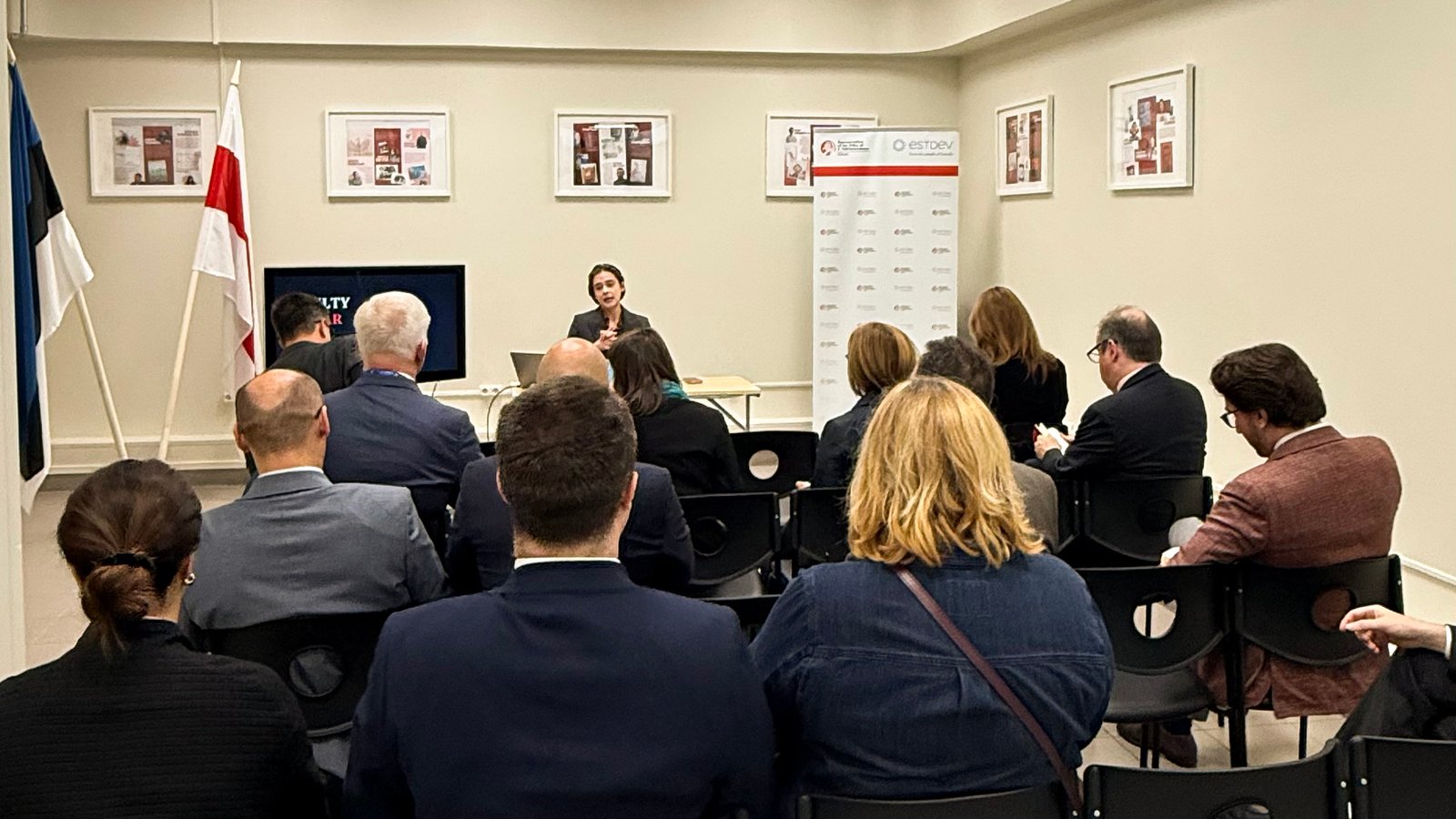




On September 9, the Representation of the Democratic Forces of Belarus in Estonia held a briefing titled “Russia’s Influence on Belarusian Youth” for representatives of the diplomatic corps, ministries, and state institutions of Estonia.
Sviatlana Tsikhanouskaya’s Advisor on Youth Policy, Marharyta Vorykhava, presented data on how Russia, assisted by the Lukashenka regime, is building a system to militarize Belarusian youth and gradually drawing young Belarusians into Russia’s military machine.
Today, around 13,000 Belarusians study at Russian universities. According to available data, 1,338 Belarusians have signed contracts with Russia’s Ministry of Defense, and at least 314 of them have been killed.
Participants discussed Russia’s mechanisms for recruiting young Belarusians, military propaganda, education as one of the channels for expanding Russian influence, and the risks faced by Belarusian students.
The discussion emphasized possible actions by the European Union. Proposals included expanding access to European education for Belarusians, providing more opportunities for young people to obtain multiple-entry visas, scholarship programs, support for those who refuse military service, and informing young people about the risks of studying and military recruitment in Russia.
Marharyta Vorykhava: “From adolescence, the state teaches a young person that military service is the norm and that there is no need to ask questions. Then they are sent to study in Russia because they have almost no other accessible options. And once there, recruiters take over.
It is important to talk about this because most of those 13,000 have not signed anything yet. This is about those who will be choosing a university next spring. If the recruiter is the only one talking to them, the recruiter will win.
We hold these briefings to push our partners toward practical solutions: visas for young Belarusians, scholarships for students, and legal assistance for those already in Russia. Europe has all the necessary tools, so there is no need to adopt new laws. What is needed is a political choice — and time, while these young people have not yet decided where to go: to Europe or to the frontlines”.
The briefing concluded with a discussion with diplomats and representatives of Estonia’s state institutions about practical steps Europe can take today to ensure that young Belarusians have a genuine European alternative to Russian influence.