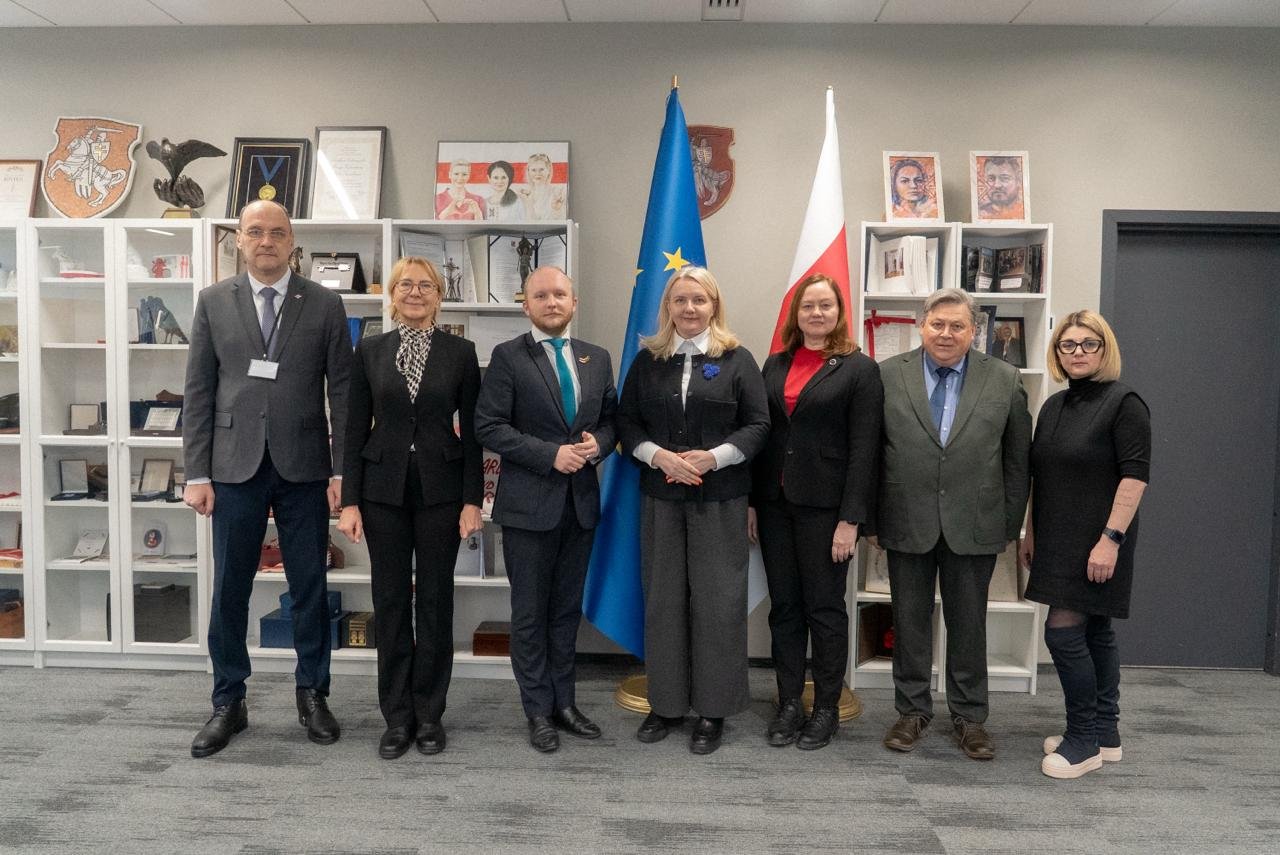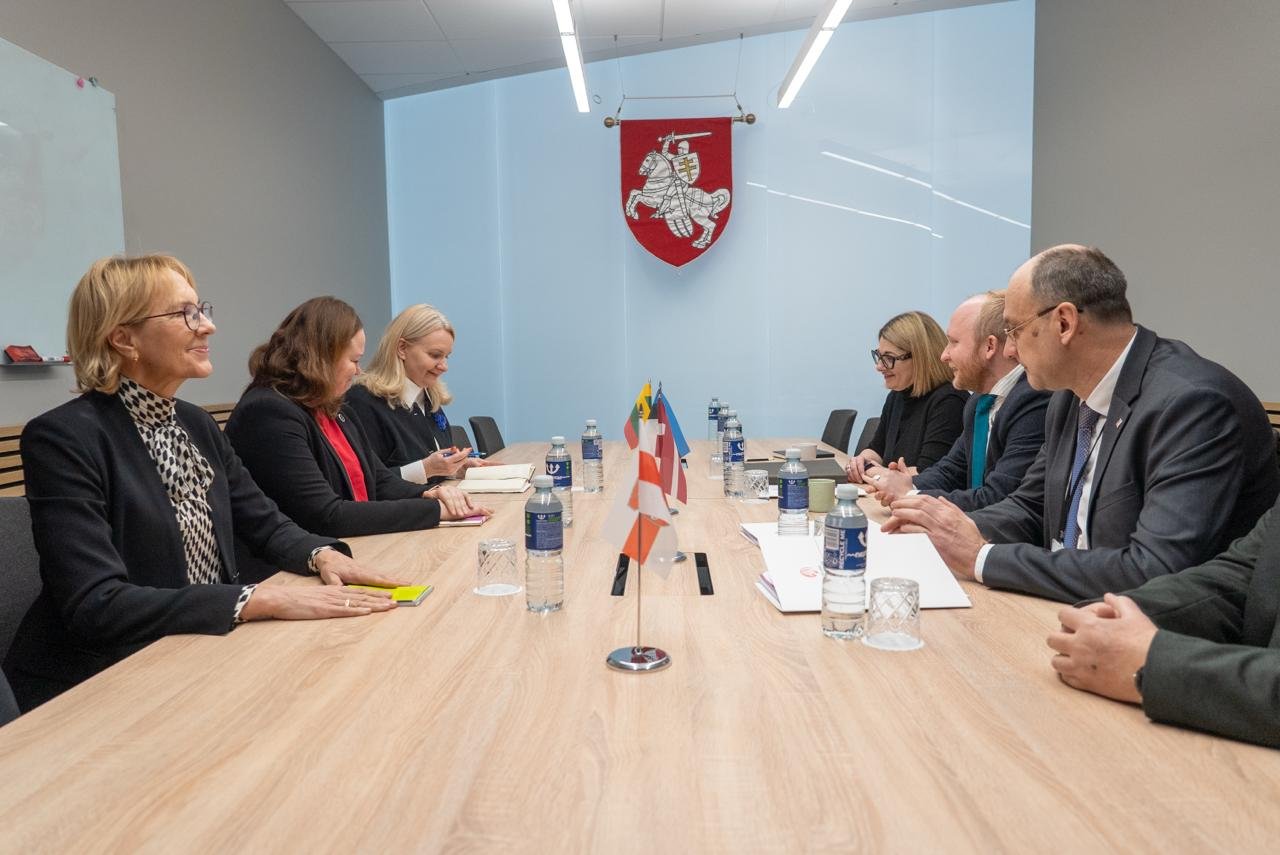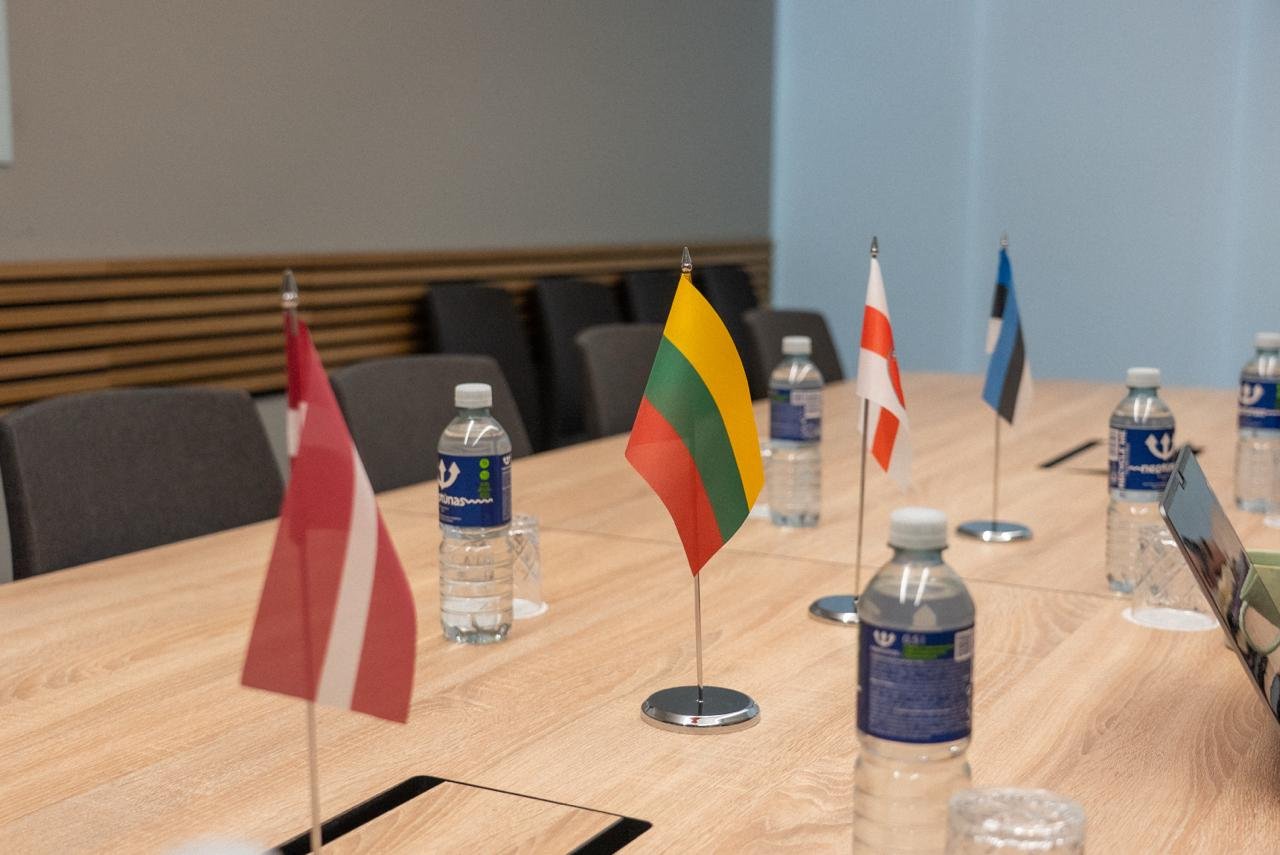




Today, February 23, representatives of the democratic forces of Belarus met in Vilnius with the special envoys of the Baltic states – Asta Andrijauskienė (Lithuania), Karmen Laus (Estonia), and Gunta Pastore (Latvia).
The Belarusian side was represented by:
- Dzianis Kuchynski, Director of Sviatlana Tsikhanouskaya’s Office in Vilnius;
- Pavel Tereshkovich, Advisor on Education and Science;
- Dzmitry Kuchuk, Non-Staff Advisor on Environment;
- Volha Zazulinskaya, Representative for Social Policy of the United Transitional Cabinet of Belarus.
Sviatlana Tsikhanouskaya’s Office in Vilnius remains the diplomatic hub of the democratic forces of Belarus and continues its systematic coordination with international partners.
During the meeting, the parties discussed the work plans of Sviatlana Tsikhanouskaya’s Office for the coming period, priority areas of cooperation with the Baltic states, and coordination within the Nordic–Baltic Eight format. They also reviewed ongoing joint projects and contacts with Lithuania, Latvia, and Estonia, including follow-up dialogue after meetings and discussions in the Seimas of Lithuania. The parties separately discussed preparations for the campaign marking the 40th anniversary of the Chornobyl disaster.
Dzianis Kuchynski opened the meeting by thanking Lithuania, Latvia, and Estonia for their consistent support of Belarus’s democratic forces, civil society, and independent media. He briefed participants on the current situation in Belarus, the Office’s international activities, and key priorities for the near future.
Dzmitry Kuchuk presented plans in environmental policy, including preparations for events marking the 40th anniversary of the Chornobyl catastrophe, calling for sustained international attention to nuclear safety and environmental responsibility in the region.
Pavel Tereshkovich spoke about ongoing educational projects, support for Belarusian students and scholars, and initiatives to develop Belarusian-language education. He addressed the current state of the education system in Belarus, sharing updated statistics. The participants also discussed support for a Belarusian-language school in Lithuania and the broader cultural and educational space for Belarusians abroad.
Volha Zazulinskaya outlined the social policy priorities of the United Transitional Cabinet and highlighted the main challenges faced by Belarusians in their countries of residence – from legal stay issues to access to social and educational services. She called for sustained, systemic support from Baltic partners.
The Office’s International Team shared plans for external engagement and further coordination with partners. The Legal Team provided an update on the human rights situation, challenges faced by Belarusians in Lithuania, Estonia, and Latvia, and the types of requests received from members of the Belarusian community.
At the end of the meeting, diplomats received answers to current questions and discussed next steps for coordination.
Dzianis Kuchynski: “We are grateful to Lithuania, Latvia, and Estonia. The Baltic states’ positions in support of the democratic forces of Belarus remain consistent and coordinated – as does their principled stance toward the Lukashenka regime”.
Volha Zazulinskaya: “I sincerely thank the Baltic countries for their unwavering support and solidarity with Belarusians. It is important for us to feel not only political but also human support – to know that human rights and the situation of Belarusians remain on the agenda.
During the meeting, we discussed in detail the situation of political prisoners and those subjected to repression, including those forced into exile who are now in need of protection. We also outlined what assistance is most urgently needed – humanitarian, legal, institutional, and financial.
I would like to thank our partners for contributing to the International Humanitarian Fund and for the practical steps taken to support victims – this directly affects people’s lives.
We reviewed our immediate plans and agreed on further cooperation. The discussion was open, substantive, and focused on continuing our joint work”.