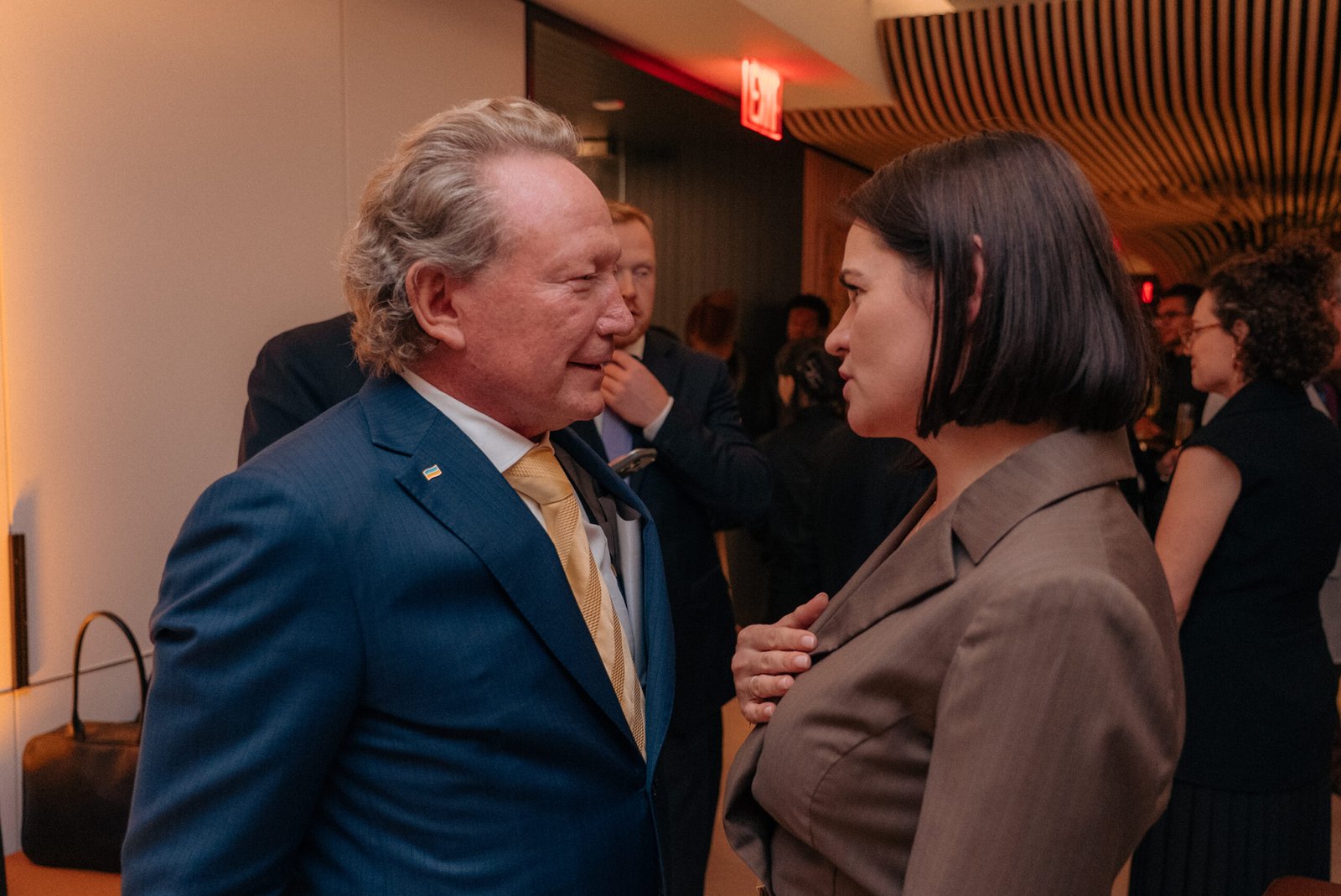




In New York, Sviatlana Tsikhanouskaya took part in a closed-door meeting organized by the UN Under-Secretary-General for Humanitarian Affairs and Emergency Relief Coordinator, Tom Fletcher, and the Founder of the Minderoo Foundation, Andrew Forrest.
The discussions focused on the future of international humanitarian assistance, including the role of G7 countries, efforts to broaden the donor base, more flexible funding, and greater responsibility for locally led organizations.
The meeting brought together heads of UN agencies and major international humanitarian organizations, as well as representatives of the United States and Australia. Participants, among others, included:
- Diene Keita, UN Under-Secretary-General and UNFPA Executive Director;
- Ted Chaiban, UNICEF Deputy Executive Director;
- Jeremy Lewin, Director of Policy Planning at the US Department of State;
- Janti Soeripto, Save the Children CEO.
With Ted Chaiban, Sviatlana Tsikhanouskaya discussed humanitarian programs that could benefit Belarusians. With Andrew Forrest, she discussed opportunities to support independent Belarusian media through the International Fund for Public Interest Media.
With Jeremy Lewin, Ms. Tsikhanouskaya discussed the US administration’s and Special Envoy John Coale’s humanitarian efforts to secure the release of political prisoners, as well as the need to support people after their release.
She also held a meeting with the CEO of the US Office of Médecins Sans Frontières (Doctors Without Borders) and former Executive Director of Human Rights Watch, Tirana Hassan. They discussed assistance to political prisoners, former prisoners, and their families. Ms. Hassan has headed MSF USA since January 2026.
Several years ago, a meeting between Ms. Hassan and Ms. Tsikhanouskaya in Davos gave rise to the idea of the International Humanitarian Fund to support those affected by repression in Belarus. Today, the IHF supports political prisoners, released prisoners, and their families, with 15 countries now contributing to it.
Sviatlana Tsikhanouskaya: “We must use meetings like these to find practical ways to support Belarusians — political prisoners, those who have been released, their families, independent media, and civil society. But we also need to think about the future. After democratic change, Belarus will need international support to rebuild the country after years of dictatorship. We need to build these partnerships now”.