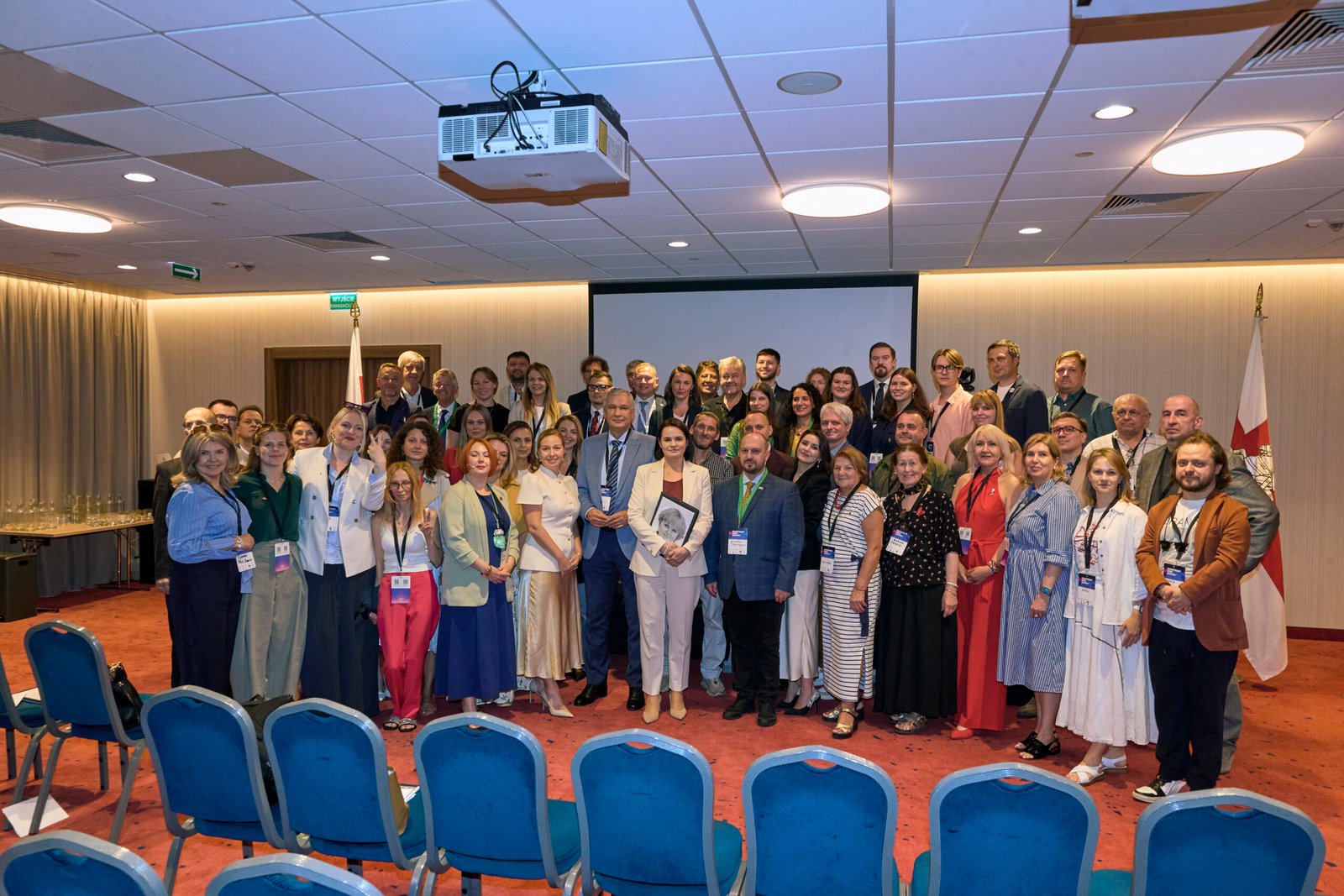




The New Belarus Conference concluded in Warsaw on August 9. Over two days, participants discussed the strategy of the democratic forces, Belarus–Ukraine cooperation, Belarus’s European future, support for Belarusians inside and outside the country, culture, education, the economy, transnational repression, and preparations for future change.
The discussions brought together political leaders, including those who were imprisoned until recently, representatives of the media and civil society, human rights defenders, journalists, cultural figures, Belarusian initiatives, and international partners.
Belarus–Ukraine Cooperation
Cooperation with Ukraine was one of the conference’s key priorities. The Resolution on the Priorities of Belarus–Ukraine Cooperation had been prepared in coordination with Ukrainian partners.
The key priority set out in the document is to prevent Belarus from becoming fully drawn into the war. The next step is to translate these priorities into practical projects and take cooperation with Ukraine to a new level.
The conference also announced the strengthening of the Ukrainian track. Volha Zazulinskaya has officially been appointed Head of the Democratic Belarus Mission in Kyiv. She will work with Ukrainian authorities and politicians, local institutions, Belarusians in Ukraine, Belarusian volunteers, the Kastus Kalinouski Regiment, and other units.
Sviatlana Shatsilina, who has been elected to the Coordination Council, will also continue working on the Ukrainian track.
Resolutions and Common Positions
Ahead of the conference, the Office of Sviatlana Tsikhanouskaya, the United Transitional Cabinet, the Coordination Council, and the Platform of Political Parties adopted nine resolutions setting out the key positions of the democratic forces of Belarus.
All resolutions are available on the website.
Political Resolution:
On Comprehensive Preparation for the Democratic Transition and Public Discussion of Reform Proposals:
On Protecting Sovereignty and Preventing Belarus from Being Drawn into War:
On the Priorities of Belarus–Ukraine Cooperation:
On Supporting Belarusians Defending Ukraine, Belarusian Veterans, and Their Families:
On Ending Political Persecution in Belarus, Releasing Political Prisoners, and Supporting Those Affected by Repression and Their Families:
On Countering Transnational Repression and Protecting Belarusians Abroad:
On Protecting Education from Political Indoctrination, Militarization, and Russification:
On Supporting Independent Belarusian Media:
Practical Tools and New Projects
The Conference featured practical tools for Belarusians and Belarusian civil society organizations. Some are designed to help Belarusians travel safely, while others will enable civil society organizations to share resources.
Updates were also presented on Try Slany and Prastora. The Prastora Platform already features reform proposals for a future Belarus, including draft laws on lustration, local government, and a new Constitution.
Alisa Ryzhychenka proposed a model for financing the democratic forces’ structures using digital tokens. Stanislau Salaviei presented Raionka, a remote healthcare system for Belarusians inside the country.
Viktar Babaryka announced a new project, Belarus Network, which aims to help Belarusians solve practical problems independently and build their communities.
Dialogue, Post-Lukashenka Belarus, and a European Future
The democratic forces of Belarus reaffirmed their readiness for dialogue and to continue the campaign for a national Round Table. Its goal is to reach out to people within the system and demonstrate a willingness to engage in dialogue to help Belarus overcome the crisis and preserve the country’s independence.
A new campaign, Post-Lukashenka Belarus, is also being launched. It aims to show Belarusians and international partners what Belarus could look like after the dictatorship and offer an alternative to Russian influence.
Another key area of work is Belarus’s European future. Dzmitry Kruk and BEROC presented a concept for a roadmap to Belarus’s European integration. It outlines the steps needed for Belarus to embark on a sustainable path toward European integration, what the European Union can offer Belarus, and what Belarus can contribute to the EU.
The democratic forces are calling on the European Union to establish a dedicated instrument to support Belarus’s democratic transition and future European integration.
Supporting Belarusians and Securing the Release of Political Prisoners
The democratic forces will continue working with the United States to secure the release of political prisoners. The process is ongoing, including preparations to welcome more people to freedom.
Work will also continue to end repression, secure a full amnesty, and create conditions for Belarusians to return home.
The conference also placed particular emphasis on social support. In recent years, Belarusians have built a support infrastructure that helps people on both sides of the border. One example is assistance with vision treatment for Belarusian volunteer fighters in Ukraine.
Appointments and International Engagement
In addition to appointing Volha Zazulinskaya as Head of the Democratic Belarus Mission in Kyiv, several other changes were announced.
Yuliya Mitskevich will serve as the Acting Representative for Social Policy at the United Transitional Cabinet. Marharyta Vorykhava will become the Chair of the Coordination Council’s International Commission after stepping down from her Cabinet position. Aliaksei Hrakhouki will now oversee the youth track.
New Belarusian democratic delegations to the Parliamentary Assembly of the Council of Europe and the OSCE Parliamentary Assembly will be formed in the near future. Work by missions and representative offices in Kyiv, Tallinn, Prague, and Brussels will also be strengthened, while strategic dialogues with partner countries will continue.
At the end of the conference, the United Transitional Cabinet held an awards ceremony honoring Belarusians and international allies who have made a special contribution to the Belarusian cause.