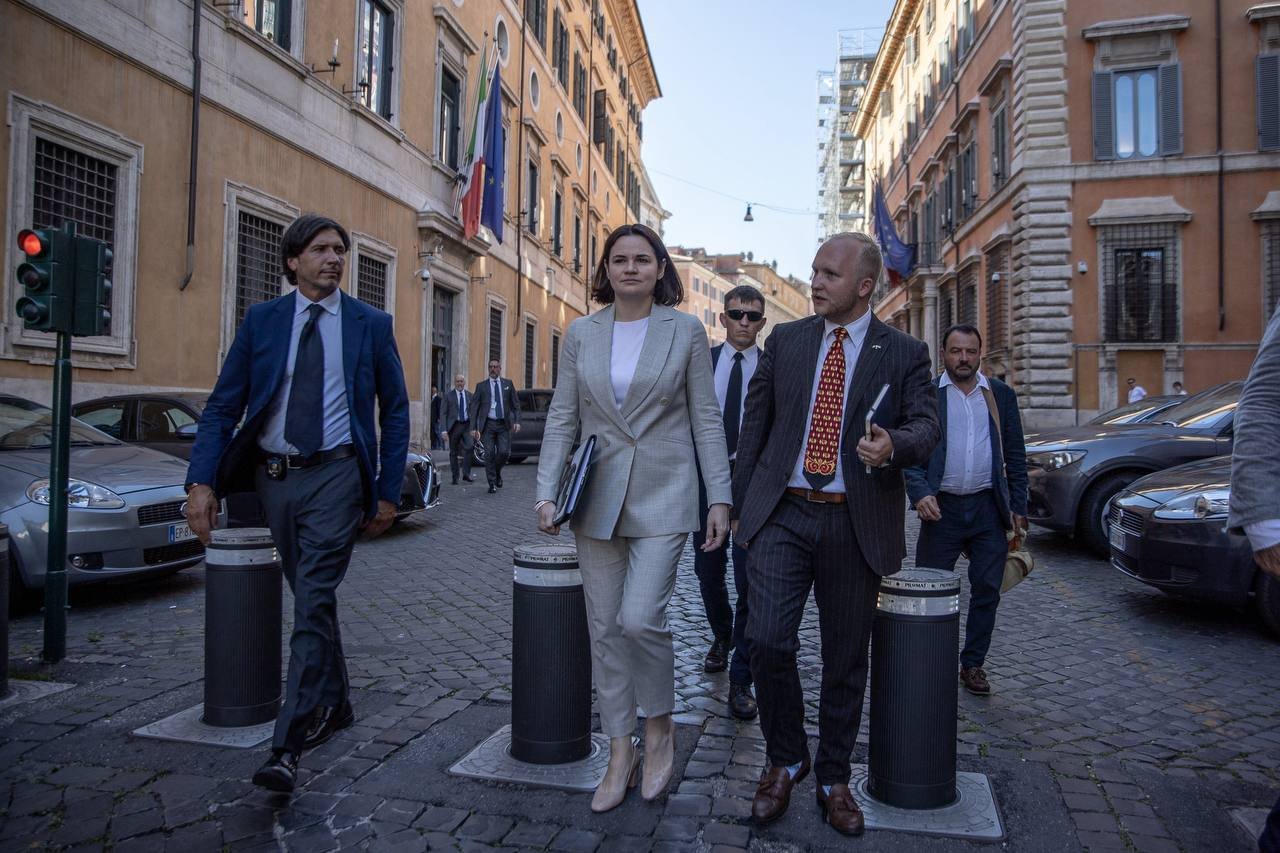




The International Department of Sviatlana Tsikhanouskaya’s Office continues its systematic work on the issue of expired Belarusian passports. Diplomatic Advisor to Sviatlana Tsikhanouskaya, Dzianis Kuchynski, explains how negotiations with governments of different countries are conducted and what results have already been achieved.
The work is being carried out in two directions:
- European-wide. Thanks to Luxembourg Solutions, recommendations were developed for Council of Europe member states on the legal procedures for Belarusians, including those with expired passports.
- Country-by-country. Each country has its own legal procedures: Lithuania and Poland have established systemic solutions, while other countries offer alien’s passports or other legal statuses.
Case by case — together with the diaspora
Sviatlana Tsikhanouskaya’s Office works with Belarusian diasporas and encourages them to raise the issue through local institutions, including ombudspersons, human rights organizations, and national authorities. At the same time, the issue is also being addressed at the political level.
What results have been achieved?
In Spain, Belarusian passports — both valid and expired — are accepted for a number of administrative procedures. There has now been an important development in Sweden: the Swedish Migration Agency has officially recognized that returning to Belarus to obtain a new passport may be dangerous and could lead to politically motivated persecution. This allows Belarusians in Sweden to apply for an alien’s passport and, in certain cases, to apply for or extend a residence permit without a valid Belarusian passport.
It is important to understand that such decisions do not come quickly. Each case can take months, and sometimes years, of meetings, negotiations, gathering evidence, and working with government institutions. Work is also continuing with other countries. Each decision creates a precedent and provides an additional argument in negotiations with other states.
Why is this so difficult?
Decisions on identity documents are often made not by foreign ministries, but by interior ministries, justice ministries, or other relevant authorities. In addition, countries need to establish that a person genuinely cannot safely return to Belarus, which requires additional checks. This is why work is needed at several levels — political, expert, and administrative.
Dzianis Kuchynski: “The Lukashenka regime has created a trap not only for Belarusians but also for the governments of other countries, which now have to find legal mechanisms to address this problem.
The issue of expired Belarusian passports is regularly raised during Sviatlana Tsikhanouskaya’s meetings with government ministers. At the same time, negotiations continue at the working level — this is how progress was achieved in Spain.
Success is therefore possible only through joint efforts by government authorities, MPs, international partners, and Belarusian diasporas. This kind of synergy helps find solutions and paves the way for further progress”.