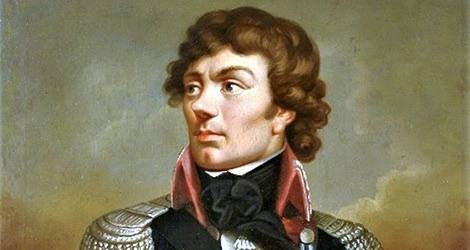




February 4 marks the birthday of Tadeusz Kościuszko (Tadevush Kastsiushka), a man whose ideas of freedom and equality extended far beyond the borders of Belarus. Born on Belarusian soil, he fought for human rights and dignity not only in Europe but also in America, where he became one of the heroes of the struggle for the independence of the United States.
Advisor to Sviatlana Tsikhanouskaya on Education, Pavel Tereshkovich, shares several facts about Belarusians’ distinguished compatriot and his legacy:
“Today, we mark the 280th anniversary of the birth of Andrzej Tadeusz Bonawentura Kościuszko, who is revered as a hero in Poland, the United States, Lithuania, and Belarus.
Historians believe that Kościuszko was baptized twice: first in the Uniate Church, which was his mother’s confession, and later in the Catholic Church. In the mid-18th century, up to 80% of Belarusians were Uniates.
Kościuszko was a patriot of the Polish–Lithuanian Commonwealth and courageously fought for the revival of the state. At the same time, he repeatedly emphasized his origins.
Kościuszko consistently advocated for the abolition of slavery and serfdom. He authorized Thomas Jefferson – his friend and the author of the US Declaration of Independence – to use property gifted to him by the American government to free enslaved people and provide them with education and upbringing, so that they would conscientiously fulfill their civic duties and, above all, defend their freedom, their country, and good public order.
Kościuszko was the initiator of the Połaniec Proclamation, which, on May 7, 1794, declared peasants to be personally free people. This marked the beginning of the abolition of serfdom, but the Russian authorities later repealed it. As a result, nearly three more generations of Belarusian peasants remained in conditions close to slavery.
The highest mountain in Australia bears the name of our compatriot. This is a good example of what should be done with the name of the highest point in a New Belarus.
The monument to Kościuszko installed in 2018 in his birthplace, Merachoushchyna near Kosava, was cast in Ukraine. It was there that the so-called ‘Leninfall’ took place – a mass dismantling of communist monuments – and bronze was significantly cheaper than in Belarus.
This, too, is a good example. We have over 400 monuments to Lenin. That amount of bronze would be enough for all the true heroes of Belarus”.