
The draft defines the legal status, institutional structure, appointment procedures for the Chairperson and auditors, safeguards for institutional independence, and the funding arrangements of the new body. It also sets out the Audit Chamber’s powers to audit the state budget, public assets, public debt, international financial obligations, and public procurement, as well as mechanisms for cooperation with the Sojm, the Government, law enforcement authorities, and the public. The draft aims to strengthen public trust in the management of public finances and help prevent financial misconduct and abuse.
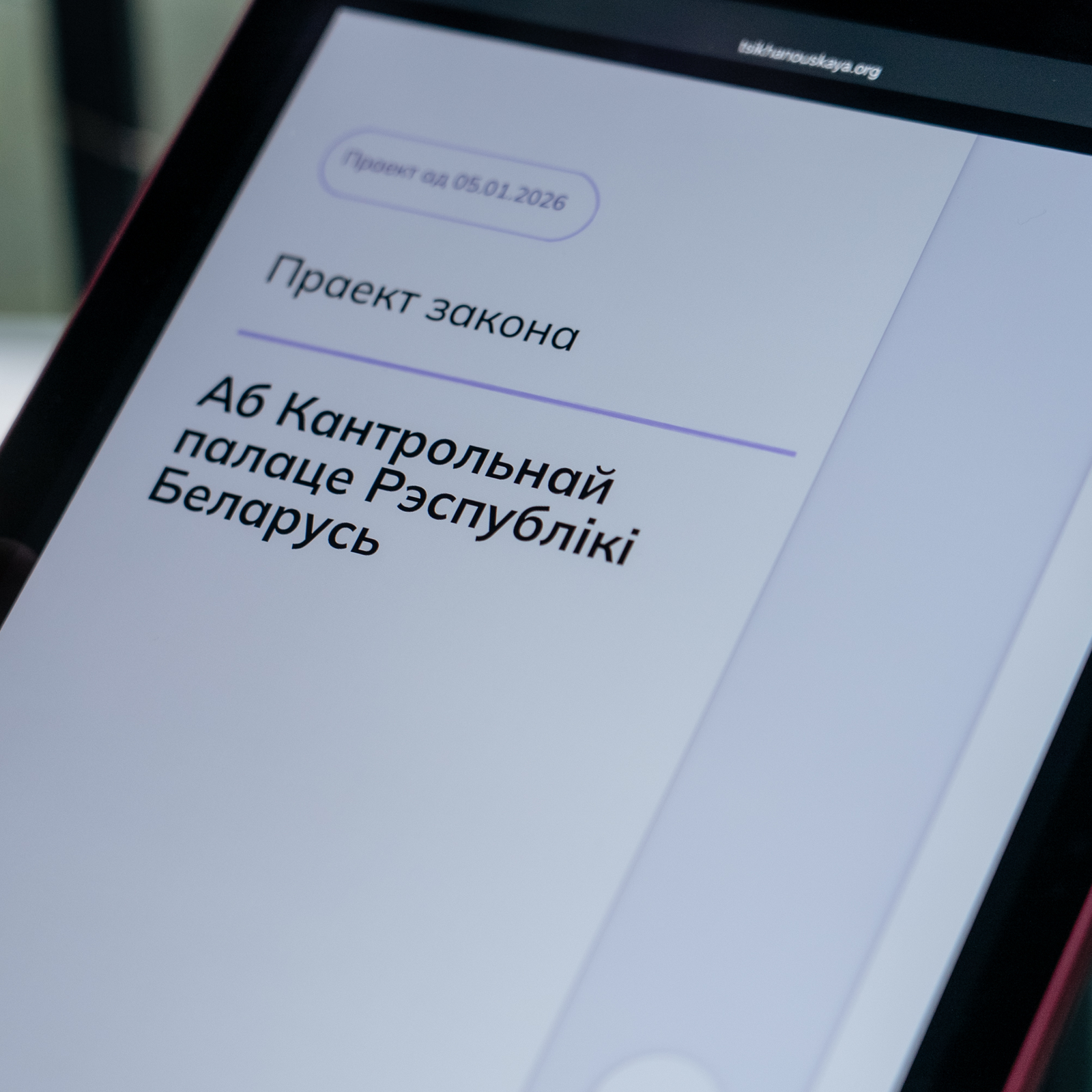
Draft Law “On the Audit Chamber of the Republic of Belarus”
The draft law introduces a model of an independent supreme audit institution accountable to the Sojm. Its primary mission is to ensure that public funds and state assets are managed lawfully, efficiently, effectively, and transparently.
The draft defines the legal status, institutional structure, appointment procedures for the Chairperson and auditors, safeguards for institutional independence, and the funding arrangements of the new body. It also sets out the Audit Chamber’s powers to audit the state budget, public assets, public debt, international financial obligations, and public procurement, as well as mechanisms for cooperation with the Sojm, the Government, law enforcement authorities, and the public. The draft aims to strengthen public trust in the management of public finances and help prevent financial misconduct and abuse.
Review the Draft Law “On the Audit Chamber of the Republic of Belarus”
Draft Law “On the Audit Chamber of the Republic of Belarus”
The draft law introduces a model of an independent supreme audit institution accountable to the Sojm. Its primary mission is to ensure that public funds and state assets are managed lawfully, efficiently, effectively, and transparently.
Review the Draft Law “On the Audit Chamber of the Republic of Belarus”
Q&A
-
The Audit Chamber is intended not as an addition to the State Control Committee, but as its replacement. Today’s State Control Committee is part of the presidential chain of command. It is an executive branch body with broad supervisory and enforcement powers. The proposed Audit Chamber, by contrast, would be an independent supreme external audit institution accountable to the Sojm. Its role is not to carry out instructions from the political leadership, but to assess whether public funds are spent lawfully, efficiently, and transparently, and whether the state properly manages public assets, public debt, public procurement, and state-owned enterprises. In simple terms, the State Control Committee exercises oversight within the executive hierarchy, whereas the Audit Chamber would provide independent external scrutiny on behalf of Parliament and the public. This ensures that oversight of public finances is based on the law, professional auditing standards, and public accountability rather than political direction.
-
Members of the Audit Chamber will be appointed by the Sojm through an open competitive selection process. Candidates must have professional experience in auditing, finance, economics, law, or public oversight, possess an impeccable reputation, and successfully pass an integrity assessment. A selection committee will evaluate applicants and recommend qualified candidates, while the final appointments will be made by the Sojm. The Chairperson of the Audit Chamber will then be elected by the Sojm from among the appointed members. This model is designed to ensure that the Audit Chamber remains accountable to Parliament while remaining independent from the Government and the presidential hierarchy.
-
The Audit Chamber will approve its own annual audit plan. However, it will also be able to launch audits outside that plan when credible information about serious irregularities emerges. As a result, complaints from citizens, investigative journalism, or information provided by civil society organizations may serve as grounds for initiating an audit.
-
The Audit Chamber will not oversee private businesses simply because they are private businesses. Its mandate is limited to monitoring the use of public funds and state assets. A private company may therefore be audited only if it is involved in managing public resources — for example, if it receives state funding, participates in public procurement, implements government-funded projects, or manages assets in which the state has an ownership interest.
-
In other words, if a company operates exclusively in the private market, it falls outside the Audit Chamber’s jurisdiction. Once public money or public assets are involved, public oversight follows.
-
A traditional audit asks one question: Was the law followed? It examines whether procedures were respected, financial records were properly maintained, and whether funds were misappropriated.
-
A performance audit asks a different question: Did the spending actually achieve its intended results, and was it worth the cost? It evaluates whether public objectives were achieved, whether resources were used economically, and whether the same results could have been achieved more efficiently. A program may comply fully with legal requirements while still wasting public money. The purpose of the Audit Chamber is therefore not only to detect violations, but also to help ensure that public resources are used effectively and deliver tangible benefits to society.
-
Publishing audit results is one of the core principles of the proposed system. The only exception concerns information protected by state secrecy or other legally protected confidentiality requirements. Even in such cases, the overall conclusions and recommendations will remain public.
-
The Audit Chamber will give taxpayers greater visibility into how their taxes are spent. It will examine not only whether public money is used lawfully, but also whether government programs deliver results, whether the state is overpaying for goods and services, whether public procurement is conducted efficiently, and whether public assets are managed responsibly. This will create stronger incentives for public authorities to spend taxpayers’ money transparently, responsibly, and in ways that genuinely benefit society.
You can discuss the draft and propose amendments on several open platforms:
-
on the website https://prastora.info
-
and on the Try Slany platform http://tryslany.com
On each platform, you can leave a comment on a specific article or provide general feedback — anonymously or under your name. All platforms protect personal data. Proposals collected from these resources are regularly gathered and forwarded to the Working Group for consideration.
Мы прапануем вам абмеркаваць гэты дакумент разам:
Нет ссылки