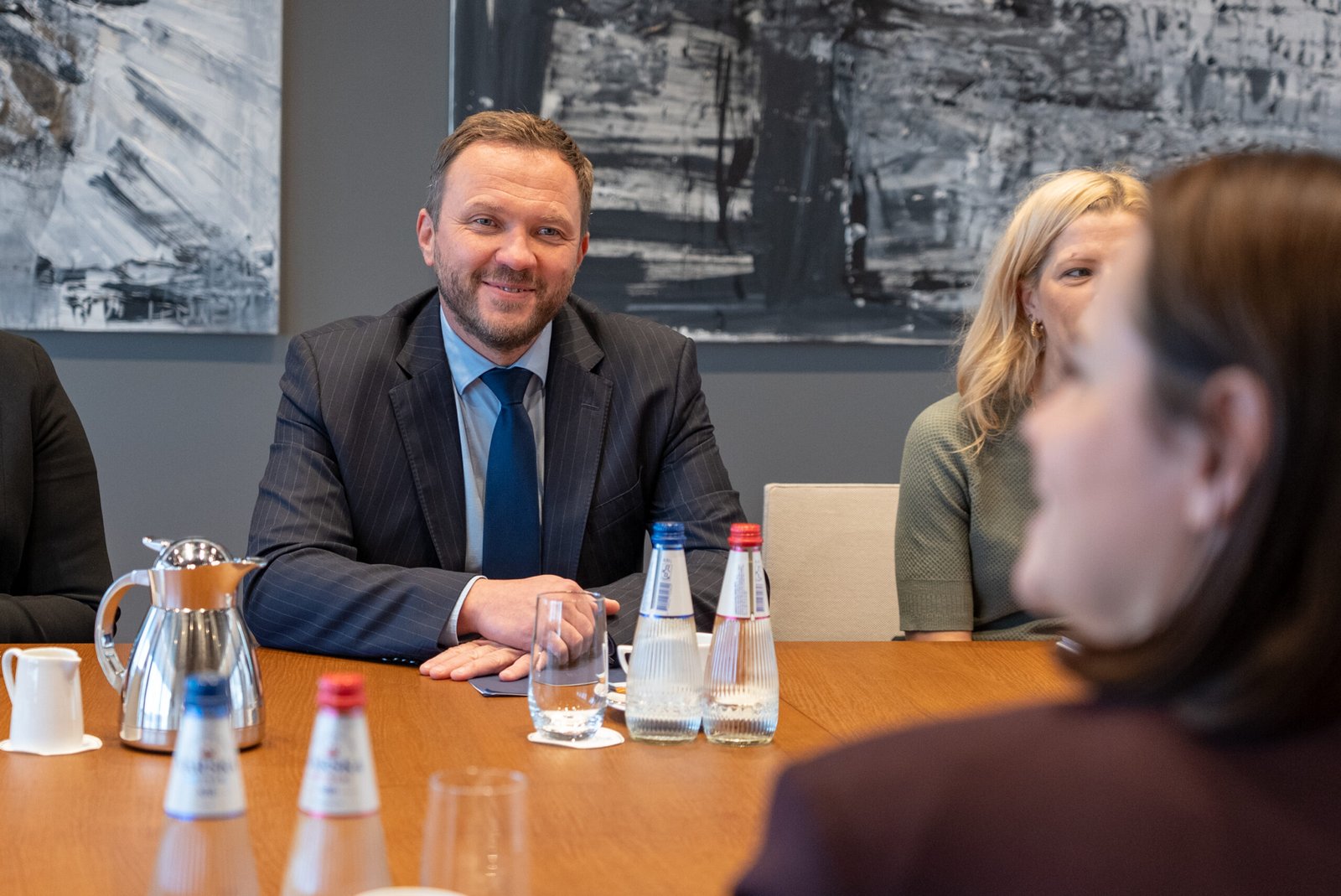


On October 30, at the Ministry of Foreign Affairs of Estonia, Minister Margus Tsahkna received Sviatlana Tsikhanouskaya. To mark the Belarusian leader’s visit, the ministry building displayed both Estonian state flags and Belarus’s national white-red-white flags.
Ms. Tsikhanouskaya thanked Minister Tsahkna for his personal support for a democratic Belarus, his consistent stance in defense of Belarusian sovereignty, and Estonia’s contribution to the International Humanitarian Fund to help political prisoners in Belarus. She also highlighted the work of the Representation of Democratic Belarus in Tallinn and Estonia’s support for Belarusian civil society on the international stage.
The meeting covered six key areas of cooperation.
The release of political prisoners and an end to repression
One of the central topics was the release of political prisoners. The parties discussed ways to further coordinate efforts by Estonia, the European Union, and the United States to secure the release of those still imprisoned for political reasons.
Ms. Tsikhanouskaya stressed that while every individual release matters, efforts must also focus on ending political persecution and repression in Belarus.
The meeting also addressed international support mechanisms for political prisoners and their families, including the International Humanitarian Fund launched in Norway. Sviatlana Tsikhanouskaya thanked Estonia for contributing to this work and supporting people affected by repression.
Protecting the rights of and supporting Belarusians in Estonia
Sviatlana Tsikhanouskaya emphasized the situation of Belarusians living in Estonia, including those who have been forced into exile by political persecution.
Minister Tsahkna and Ms. Tsikhanouskaya discussed residence and legal status issues, obtaining and renewing documents, and restrictions that may affect Belarusian citizens. The Belarusian leader urged Estonia to take the specific circumstances of Belarusian refugees into account when developing and implementing restrictive measures.
She emphasized that Belarusians who have suffered at the hands of the Lukashenka regime must not be equated with the regime itself. Security concerns should be addressed with due consideration for people seeking protection and the opportunity to rebuild their lives in Estonia.
Visa issues
The discussions covered the possibility of issuing visas to Belarusians living in third countries who cannot safely return to their homeland.
For many Belarusians in exile, access to documents and freedom of movement remain pressing concerns. Ms. Tsikhanouskaya called for practical solutions that would allow these people to obtain the documents they need and maintain their ties with European countries.
Support for Ukraine
Margus Tsahkna and Sviatlana Tsikhanouskaya discussed continued support for Ukraine and opportunities for cooperation between Belarus’s democratic forces and their Ukrainian and Estonian partners.
They also addressed preparations for the Ukraine Recovery Conference, which will take place in Tallinn on January 28–29, 2027, including opportunities for Belarus’s democratic forces to participate and contribute to future Ukraine recovery initiatives.
Ms. Tsikhanouskaya stressed that Belarus’s democratic forces are interested in further cooperation with Ukraine. She noted that a democratic Belarus could become a partner in Ukraine’s reconstruction after Russian aggression.
Joint international efforts
The two discussed further coordination and joint initiatives at the United Nations, the Organization for Security and Co-operation in Europe, and the European Union.
They exchanged views on how to keep Belarus on the international agenda, defend the country’s independence, and counter attempts to grant international legitimacy to the Lukashenka regime without any meaningful changes in Belarus.
Margus Tsahkna and Sviatlana Tsikhanouskaya also discussed preparations for Belarus Days in Brussels and opportunities for Estonia to continue working with Belarus’s democratic forces at international events.
Ms. Tsikhanouskaya noted that Estonia’s support is particularly important for advancing the Belarusian issue at the European level and keeping international attention focused on the situation in Belarus.
Sanctions and accountability for the regime
The meeting addressed the need to maintain sanctions pressure on the Lukashenka regime in response to its repression of Belarusians, complicity in Russia’s aggression against Ukraine, and actions that threaten regional security.
Sviatlana Tsikhanouskaya highlighted the need for a common stance among European partners, noting that efforts to secure the release of political prisoners must go hand in hand with demands to end repression and must not serve as grounds for normalizing relations with the regime internationally without systemic changes in Belarus.
The parties discussed continued international efforts to hold those responsible for repression and human rights violations accountable.
Belarus’s independence and future regional security
Another part of the discussion focused on threats to Belarusian sovereignty, Russia’s military presence in Belarus, and the impact of the war against Ukraine on the security of the entire region.
Ms. Tsikhanouskaya stressed that Belarus must not become a bargaining chip in potential negotiations to end the war. Any future regional security agreements must take Belarus’s independence and sovereignty into account and prevent Russia from continuing to use Belarusian territory for military aggression.
She noted that Belarus’s security is closely linked to that of Ukraine, the Baltic states, and Europe as a whole. Preserving Belarus’s independence must therefore remain an important part of international discussions about the region’s future.
At the end of the meeting, Sviatlana Tsikhanouskaya once again thanked Margus Tsahkna and Estonia for their longstanding support for the Belarusian people and democratic forces. She called for continued joint efforts to secure the release of all political prisoners, protect the rights of Belarusians, safeguard Belarus’s independence, and strengthen regional security.