



RELEASE OF 25 POLITICAL PRISONERS
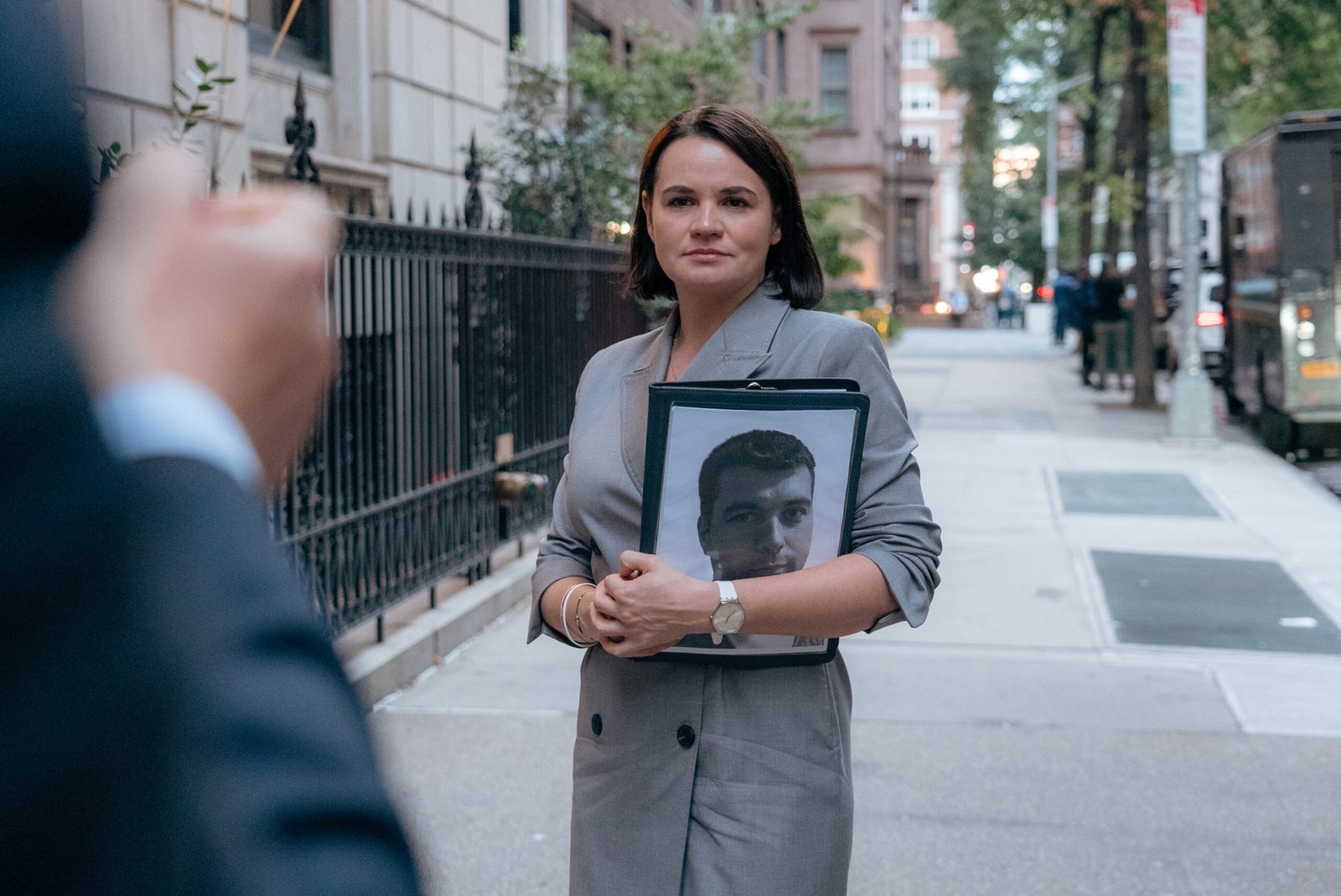
On September 16, 25 political prisoners were released and taken to Lithuania. Sviatlana Tsikhanouskaya came in person to welcome the released political prisoners and shared a guide for Belarusians to support them. She released a statement: “Every person released is a victory. So today’s release is another humanitarian result, but it is far from the end of this process. The work must continue until all political prisoners are free. We will welcome those who have been released, help them rebuild their lives after imprisonment, and continue reminding the world about everyone who is still waiting for their day of freedom”.
Following coordination with partners, Sviatlana Tsikhanouskaya’s Diplomatic Advisor, Dzianis Kuchynski, announced that 13 political prisoners would remain in Lithuania, 10 would go to Poland, and two to another country. He also provided updates on the assistance they were receiving.
OSTROGSKI FORUM
On September 18–19, the political and public section of the 5th Ostrogski Forum was held in Kyiv, providing a platform for discussing Belarus–Ukraine relations, regional security, and future partnership between a democratic Belarus and Ukraine. Sviatlana Tsikhanouskaya’s Chief Advisor, Franak Viacorka, and Advisor on Parliamentary Cooperation and Constitutional Reform, Anatoli Labiedzka, took part in the discussions.
Mykhailo Podolyak of the Office of Ukraine’s President reaffirmed the country’s support for Belarus’s democratic forces. A working group on issues concerning Belarusians in Ukraine was announced to help address practical matters, including legal status, documentation, and joint projects. MP Bohdan Yaremenko called for strengthening parliamentary cooperation with Belarus’s democratic forces.
A joint statement was adopted regarding the establishment of the circumstances of the forced displacement of Ukrainian children to Russia and Belarus and assistance in their return. The forum also presented the Belarus–Ukraine Relations Index and the results of a new public opinion study in Ukraine. Other discussions focused on regional security, the situation of Belarusians in Ukraine, countering the “Russian world” ideology, and the role of Belarusian volunteer fighters in the future security architecture.
NEW CONTRIBUTIONS TO THE INTERNATIONAL HUMANITARIAN FUND
On September 14, two more countries pledged to join the International Humanitarian Fund by contributing around €200,000 to support Belarusians affected by repression. Once all procedures are completed, 15 countries will be participating in the IHF.
Dzianis Kuchynski discussed the current situation with the Secretary General of the Norwegian Helsinki Committee, Berit Lindeman. The parties discussed the current state of the IHF, the use of funds already received, and efforts to bring new countries on board. Between 2024 and 2026, the IHF received more than €3 million in contributions. Most of the funds have already been used to support people affected by repression, including political prisoners and those released in recent months.
BELARUSIAN DEMOCRATIC FORCES’ DELEGATION TO THE NORDIC COUNCIL
A delegation of Belarus’s democratic forces was established at the Nordic Council, allowing the Belarusian democratic movement to have an official voice in the Nordic Council. This is the result of systematic work by Sviatlana Tsikhanouskaya’s Office to institutionalize relations with Nordic partners.
The established delegation means the formalization of relations between democratic Belarus and the Nordic Council. The new format of cooperation largely resembles the model of cooperation with the Parliamentary Assembly of the Council of Europe, where the democratic forces of Belarus also have a delegation.
MEETING WITH SZYMON DREJ
On September 15, Sviatlana Tsikhanouskaya met in Warsaw with historian Dr. Szymon Drej, who is the Director of the Museum of the Battle of Grunwald in Stębark. The meeting was also attended by Yury Meliashkevich, who initiated the campaign to install a white-red-white flag at the Grunwald battlefield, and Franak Viacorka.
Sviatlana Tsikhanouskaya thanked Szymon Drej for supporting the initiative to make the participation of warriors from the lands of present-day Belarus in the Battle of Grunwald and the annual commemorative events more visible. The parties agreed to establish long-term cooperation, prepare a Belarusian version of the audio guide, and ensure the participation of Belarus’s democratic forces in the museum’s international events alongside partners from Poland, Lithuania, and Ukraine.
MEETING WITH TIMOTHY SNYDER
On September 17, Sviatlana Tsikhanouskaya attended a public meeting with historian Timothy Snyder in Warsaw, hosted by Fundacja Demokracja. She delivered opening remarks, noting that Belarus, Ukraine, Poland, and Lithuania are part of the region that Timothy Snyder called the Bloodlands — lands that suffered particularly heavily from wars, totalitarianism, and dictatorships. She stressed that Ukraine is once again defending its freedom against Russian aggression, while for Belarus, Ukraine’s victory and the preservation of its own independence are directly linked.
ANNIVERSARY OF BELARUS’S OFFICIAL NAME AND NATIONAL SYMBOLS ADOPTION
September 19 marked the day when the Republic of Belarus officially received its name, and the white-red-white flag and Pahonia became state symbols. Sviatlana Tsikhanouskaya addressed Belarusians on the occasion: “Over the years, the regime has done everything it can to make Belarusians afraid of their own symbols. But the opposite has happened: for many, these symbols have become even more meaningful and dear. And above all, I want our young people to know about September 19. I want them to know that Belarus did not always look the way it does today. In our recent history, there was already a moment when the country reclaimed its name, its flag, and its coat of arms. History can be rewritten in textbooks, flags can be removed from buildings, and symbols can be banned. But it is people who give them meaning. And Belarusians have not forgotten their white-red-white flag or their Pahonia”.
MEDIA
Zerkalo (Belarus), Reuters (International), Delfi (Lithuania), Kauno diena (Lithuania), Delfi (Lithuania), Kotrikadze inostrannykh del and Dozhd (International), LRT (Lithuania), Reform.News (Belarus), Zerkalo (Belarus), Zerkalo (Belarus), Belsat (Belarus), Nasha Niva (Belarus), Texas National Security Review (the United States).