


English

We invite all Belarusians and friends of Belarus to take part in this important event of 2026.
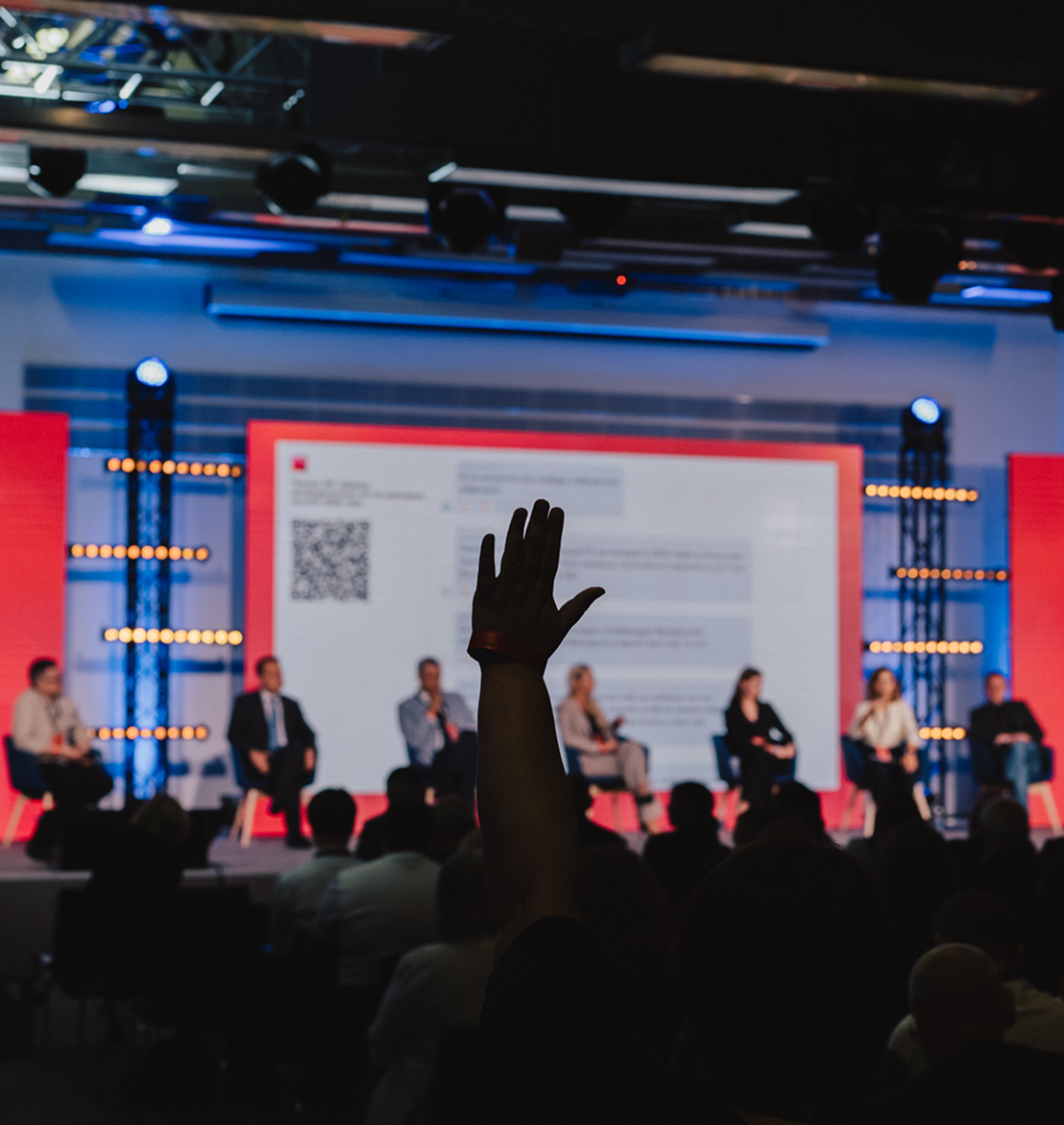
The conference will provide an opportunity to reflect on the changes that have taken place in recent years, explore the networks and mechanisms of support for Belarusians and Belarus, examine the outlook for the region, and define the role that we — the democratic forces, Belarusians, and Belarus as a whole — play and will continue to play in these processes.
 Warsaw, Poland
 August 8–9, 2026



Language, education, culture and the information space are interconnected areas that are crucial to preserving Belarusian identity and shaping the country’s future. Today, more than ever, these fields face serious challenges and require up-to-date assessments, coordinated approaches and practical solutions. The Office for National Revival of the United Transitional Cabinet will present four policy papers, each dedicated to one of these areas. The papers include an analysis of the current situation, future projections and concrete recommendations.
Organizer:
Office for National Revival of the United Transitional Cabinet
Speakers:
This panel discussion will examine the role of the regime in Belarus in the Russian Federation’s aggression against Ukraine, present the evidence collected to date, and explore avenues for holding Belarus’s senior political and military leadership accountable within the framework of the Special Tribunal for the Crime of Aggression.
Organizer:
National Anti-Crisis Management
Presentation:
Discussion:
Registration:
Open to registered conference participants only. The venue will be communicated after registration.
Registration link
What role will artificial intelligence play in Belarus’s future? This debate will explore both sides of the question, discussing AI’s potential for democracy, data security and the risks of new technologies being used for propaganda. Can AI become an ally of democratic transformation, or is it inevitably destined to become a tool of surveillance and manipulation?
The discussion will go beyond theory. A new AI-powered platform will be presented for the first time, demonstrating how artificial intelligence can analyze the financial performance of Belarusian state-owned enterprises and propose transformation scenarios as part of future state sector reform. This is a real-world example of how AI is already contributing to democratic transformation — and an opportunity to see the future of reform in action.
Organizer:
Office for Economy and Finance of the United Transitional Cabinet
Speakers:
Have an idea? Let’s discuss it. The regime is trying to remove elections from the Belarusian public agenda, democratic forces face difficulties reaching Belarusians abroad, and diaspora communities in many countries remain fragmented. Could locally elected Belarusian community councils — soimiks — provide an answer? We will discuss whether such representative bodies are needed, how they could function, and whether they could help unite Belarusians abroad.
Organizers:
Anatoli Liabedzka, Advisor to Sviatlana Tsikhanouskaya on Parliamentary Cooperation and Constitutional Reform; European Dialogue Center
Speakers:
Registration:
https://forms.gle/mf6KKcQGrAS9Wp2X6
Repression, exile and shrinking financial support — can Belarusian civil society not only survive, but also maintain its influence?
The event will present the findings of the Civil Society Organization Sustainability Index, which has been assessing Belarusian civil society organizations since 2000. It will provide an evidence-based overview of the sector’s current state, followed by a discussion on what is needed to ensure that civic organizations and initiatives remain a driving force for democratic change.
Organizer:
CSO Fusion
Welcome remarks: Sviatlana Tsikhanouskaya, President-elect of Belarus
Fishbowl discussion:
Moderator: Uladzimir Korzh, Coordinator of the CSO Sustainability Index assessment
Language: Belarusian, with simultaneous interpretation into English.
Registration (until August 6):
https://forms.office.com/e/CBbSquPYrZ
In August 2020, Minsk spoke the language of freedom, solidarity, and hope. Photographs of protest street art, white-red-white flags carrying the personal stories of Belarusians, and video installations will immerse visitors in the atmosphere of a city united by its belief in change. The exhibition runs from August 5 to 23.
Organizer:
Free Belarus Museum
Venue:
Free Belarus Museum, ul. Foksal 11, Warsaw
Free admission
The situation in Belarus and the wider region is changing. The United States has successfully secured the release of political prisoners, proceedings against Aliaksandr Lukashenka have been launched in The Hague, Russia is facing strikes on its own territory, and the regime has softened its pro-war rhetoric. At the same time, repression continues, although its forms are evolving. These developments create both new challenges and new opportunities for the Belarusian democratic forces. How can they seize the political initiative and change the status quo?
Moderator:
Roza Turarbekava, PhD, international relations expert
Speakers
Sviatlana Tsikhanouskaya's visit to Kyiv in May has opened new opportunities for Belarusian-Ukrainian cooperation. How can Belarusians and Ukrainians support one another? What joint steps can be taken in the near future, and what cooperation is already underway? What should be the priorities for strategic cooperation?
Moderator:
Yevhen Mahda, Ukrainian political scientist, Executive Director of the Institute of World Policy
Speakers:
Moderator:
Kseniya Lutskina, journalist, member of the first Coordination Council, former political prisoner
Topic I. Punish, Not Forgive? Where Should We Draw the Line?
A: Without lustration, vetting and professional bans for everyone involved in repression, we will simply pave the way for the return of authoritarianism. The system of violence will be restored, and its victims will be betrayed. Justice and accountability for perpetrators are the only foundation on which trust in new democratic institutions can be built.
B: If we dismiss or imprison civil servants, security officers and teachers, the country will simply stop functioning: there will be no one to run cities, educate children or maintain critical infrastructure. We need our own "pact of forgetting" and national reconciliation to avoid a new division and ensure a peaceful democratic transition.
Debaters:
Mikalai Dziadok, civic and political activist, blogger, writer, former political prisoner (twice)
Roza Turarbekava, PhD, international relations expert
Topic II. Escaping the "Belarusian Enclosure" vs. Belarus First
A: Forcing — or even gently promoting — the Belarusian language across all spheres of life is an attempt to move forward while looking backwards. In the twenty-first century, success belongs to those who create globally competitive products and compete on the international market. It makes little difference whether the code of a Belarusian start-up, a scientific breakthrough or a business is developed in English, Russian or Belarusian. What matters is efficiency and results. An excessive focus on language confines us to a local space when we should be integrating into the global economy.
B: Globalism without a national foundation leads to complete assimilation and absorption into the "Russian World". If language and culture do not matter, why do we call ourselves Belarusians at all, rather than simply the inhabitants of a certain territory? Without our own identity, we will continue to lose the information and cultural war against Russia. A state that does not protect and develop its language has no future. A Belarusian can create a global product, but if it is disconnected from their culture, its value benefits other countries rather than a New Belarus.
Debaters:
Aliaksandr Fiaduta, public figure, literary scholar, Doctor of Humanities, former political prisoner
Katsiaryna Vadanosava, popularizer of Belarusian history, musician, television presenter
Topic III. Does Neutrality Guarantee Belarus’s Security?
A: For many years, opinion polls showed that many Belarusians viewed neutrality or non-alignment as the best guarantee against being drawn into regional or global military conflicts and geopolitical confrontation. The Swiss model — or a form of "Finlandization", involving limited geopolitical manoeuvrability while preserving economic independence and sovereignty — is often presented as a viable option for living alongside an aggressive and ambitious neighbour.
B: Traditional models of neutrality no longer work in today's world. Even countries that once maintained a non-aligned status are rapidly abandoning it. We have entered an era of new global confrontation, and Belarus can only secure its future as part of a military-political alliance. Whether this means NATO or another regional security arrangement should be determined solely by strategic necessity and the terms of membership.
Debaters:
Andrei Kazakevich, PhD in Political Science, Director of the Political Sphere Institute of Political Studies
Zmitser Mitskevich, journalist at Belsat, national security and defence analyst
Change in Belarus is only a matter of time. Every dictatorship eventually falls. The question is: what comes next? What could a democratic transition look like? Which reforms should be prepared, and is it worth preparing them already today? Can Belarus overcome its total dependence on Russia? What can the European Union offer Belarus, and what can Belarus offer the European Union? We must think not only about what we want to leave behind, but also about the future we want to build.
Moderator:
Aliaksandr Knyrovich, entrepreneur, blogger, TV presenter
Speakers:
Moderator:
Maria Lando, expert in civil society organization development
1. Analytical Report: Comparative Analysis of National Dialogues in Germany, Poland, and Spain as Possible Models for Overcoming the Political Crisis in Belarus »
Public presentation of the report, its key findings, and recommendations. The report examines examples of national dialogues — formats in which different political and social forces managed to overcome political crises, agree on reforms, and restore social cohesion.
Presenter:
Artsiom Brukhan, Deputy Head of the People’s Anti-Crisis Management
2. Positive Alternative — A Vision of a New Belarus
Positive Alternative — blueprints for a Belarusian home in the European neighborhood.
Presenter:
Anatoli Liabedzka, Director of the European Dialogue Center, Advisor to Sviatlana Tsikhanouskaya on Constitutional Reform and Parliamentary Cooperation
3. Raionka
An assistance program for vulnerable groups of Belarusians, which will help people connect with Belarusian doctors and receive answers to their questions. The program aims to become an example of strengthening links between Belarusians in exile and inside the country.
Presenter:
Stanislau Salavei, Deputy Representative for Social Policy of the United Transitional Cabinet
4. Try Slany Platform
Presentation of the updated Try Slany Platform. A digital hub for civic and political activity of the pro-democratic Belarusian community, providing convenient tools for engaging with audiences. This summer, the New Belarus team updated the platform’s functionality and design and will present its new opportunities.
Presenter:
Daniel Harkavy, Try Slany Platform / New Belarus
5. Digital Tools of Sviatlana Tsikhanouskaya’s Office
Presentation of two tools for the digital infrastructure of civil society (NGOs, diaspora organizations, and political structures):
Presenter:
Marharyta Vorykhava, Advisor to Sviatlana Tsikhanouskaya on Youth Policy and Students
6. Equality, Inclusion, Responsibility: Gender Policy Project for the Democratic Forces of Belarus
A document prepared by a group of Belarusian and international experts following interviews and consultations with representatives of Sviatlana Tsikhanouskaya’s Office, the United Transitional Cabinet, and the Coordination Council. It provides recommendations on promoting gender equality, inclusion, and accountability, as well as preventing harassment and discrimination within the democratic forces, across all areas of activity and work, based on the principles and standards of the Council of Europe.
Presenter:
Dr. Graziella Piga, Consultant at the Council of Europe
7. Our Grunwald-2027. Ideas, Goals, Objectives
The “Our Flag over Grunwald!” campaign is an initiative aimed at commemorating and honoring the memory of the warriors who participated in the Battle of Grunwald and originated from the lands of present-day Belarus. The main goal of the campaign is to ensure the presence of Belarusian national symbols — the white-red-white flag and the Pahonia coat of arms — at official venues during the celebrations marking future anniversaries of the victory. Another goal is to increase Belarusian participation in the commemorations through an information campaign, as well as to encourage Belarusian medieval reenactors to take part in an organized and visible way, making Belarusian presence more prominent.
Presenter:
Yery Meliashkevich, Acting Chair of the Belarusian Popular Front Party
8. Belarus Democracy Tokens: Concept for a Self-Financing System for the Democratic Movement
The democratic forces need tools that make self-financing simple and attractive for Belarusians and Belarusian businesses. The presentation will introduce the concept of Belarus Democracy Tokens — a system that records donors’ contributions and provides for recognition of their support in a future democratic Belarus. All interested participants are invited to join the discussion and contribute to the development of this idea.
Presenter:
Alisa Ryzhychenka, Representative for Economy and Finance of the United Transitional Cabinet
Belarus has become a testing ground for modern authoritarianism, where mechanisms of repression and persecution are refined — from "extremist" lists and the passport decree to the case against the European Humanities University and the misuse of INTERPOL. How can we ensure the safety of activists inside Belarus and abroad? How can legal assistance be strengthened? How can cooperation with governments and international organisations be strengthened to counter transnational repression?
Moderator:
Fiodar Pauliuchenka, Editor-in-Chief at Reform.news
Speakers:
Belarusian identity is under increasing attack from the ideology of the "Russian World" and the regime's policy of Russification. This is particularly evident in the education system, which plays a central role in shaping identity. If education in Belarus has become an instrument of state ideological control, a vehicle for colonial narratives and practices, and large-scale repression, how should the Belarusian democratic community in exile respond? Today, the Belarusian diaspora is the only place where Belarusian national identity, the humanities and culture can be preserved. This is why we need a complete Belarusian-language education system — from preschool to a Belarusian national university. Can the European Humanities University fulfil the role of a national university?
What kind of new university does Belarus need? What role should identity and language play within it? Why do university projects in exile matter? Do the interests of Belarusian youth and the academic community align when it comes to creating a new university? Can Belarusian business become one of the founding supporters of a new university as part of its mission to support the Belarusian nation?
Moderator:
Alina Koushyk, Director of Belsat TV
Speakers:
The Belarusian state has ceased to fulfil its basic obligations to a significant share of its citizens and, in many cases, has itself become a source of threat. As a result, Belarusians have been forced to build elements of their own social protection system beyond the state and across national borders. Can we move from fragmented solidarity initiatives to a transnational Belarusian social protection system that serves both people inside Belarus and Belarusians abroad?
Moderator:
Katsiaryna Yerusalimskaya, journalist and presenter at Malanka Media
Speakers:
Independent media and researchers are working under conditions of comprehensive censorship, financial pressure and audience fatigue. The key challenge is how to safely reach people inside Belarus while effectively countering Russian propaganda. This panel will explore new collaborative approaches, innovative ways of delivering information, and how to maintain connections between Belarusians on both sides of the border.
Moderator:
Volha Loika, Editor-in-Chief at Plan B, former political prisoner
Speakers:
Meeting point:
Nicolaus Copernicus Monument, Krakowskie Przedmieście, 00-333, Warsaw
Share your posts, photos, and videos on social media using the hashtag #NewBelarusConference2026 #КНБ2026.
Editors from independent media outlets are following the hashtag and may feature your thoughts, quotes, and photos or videos in their coverage. Your post could even be included in conference
round-ups.
Every sincere post is a meaningful contribution to our shared cause.
your quote of the day, something that surprised you, something you’ll remember, your key takeaway, your reaction, or behind-the-scenes moments.
Use the hashtag
#NewBelarusConference2026
— otherwise, we won't be able to find your post.
Only photograph or film people off stage with their consent.
If you quote someone, make sure your quotation is accurate.