



During a meeting with the Council of Ministers, Lukashenka questioned the need for master’s programs in the country. According to him, the Bologna Process was deliberately promoted in Belarus in order to attract trained specialists abroad and offer them jobs there.
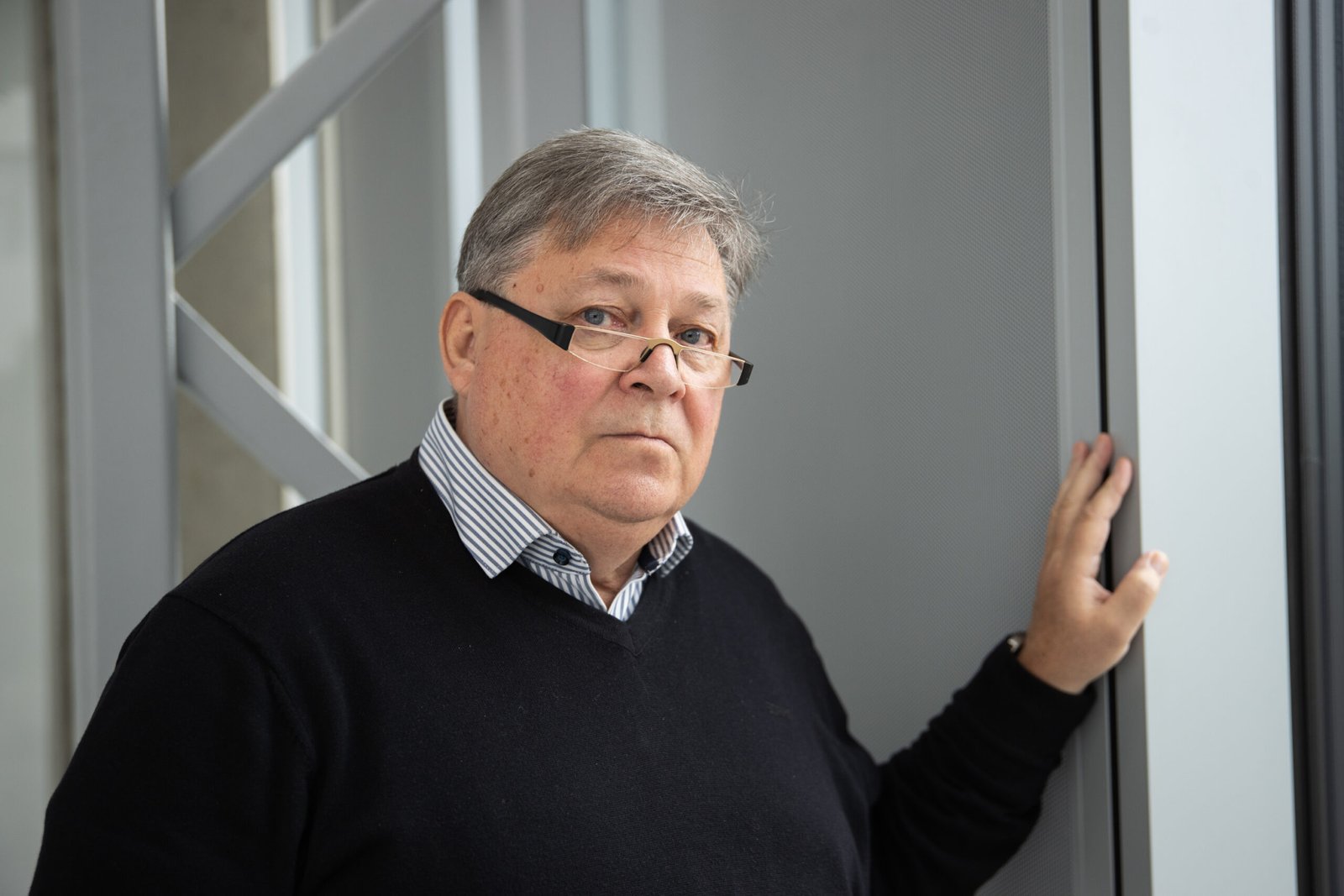
Sviatlana Tsikhanouskaya’s Advisor on Education and Science, Pavel Tereshkovich, comments on the situation:
“Lukashenka has yet again interfered in education. This time, the victim is master’s education, which he called ‘abnormal’ because it represents a feature of the Bologna Process. His ideas about what is ‘normal’ in education, apparently, haven’t changed since he graduated from the Mahiliou Pedagogical Institute. He has never seen another type of education and cannot even imagine it.
But the world doesn’t stand still. Even the authors of the textbook ‘The History of Belarus in the Context of World History’ (Part 2, 2025), who praise ‘the leading role of the Communist Party of the Soviet Union, have understood that at the turn of the centuries the industrial era was replaced by the post-industrial – the era of knowledge, where education and knowledge determine a country’s economic success.
A master’s program is a postgraduate course for advanced study in a specific field of knowledge or profession. It has been part of university education since the 13th century. The Bologna Process set common standards for master’s degree training, and according to UNESCO’s international classification, it corresponds to the 7th level of education. For UN member states, the master’s degree is a standard form of education.
In developed countries, it is a widespread form of education: in the European Higher Education Area, the share of master’s students exceeds 20%, and among adults over 25 – between 13–17% (Belgium, Denmark, Germany). A master’s diploma is often required for public service, and in Finland – to become a teacher. In Belarus, however, the share of master’s students is just over 4%, and it will most likely decline further in the coming years.
What will this lead to? It’s not hard to predict – to the further degradation of higher education, which the regime is trying to present as ‘the best in the world’”.