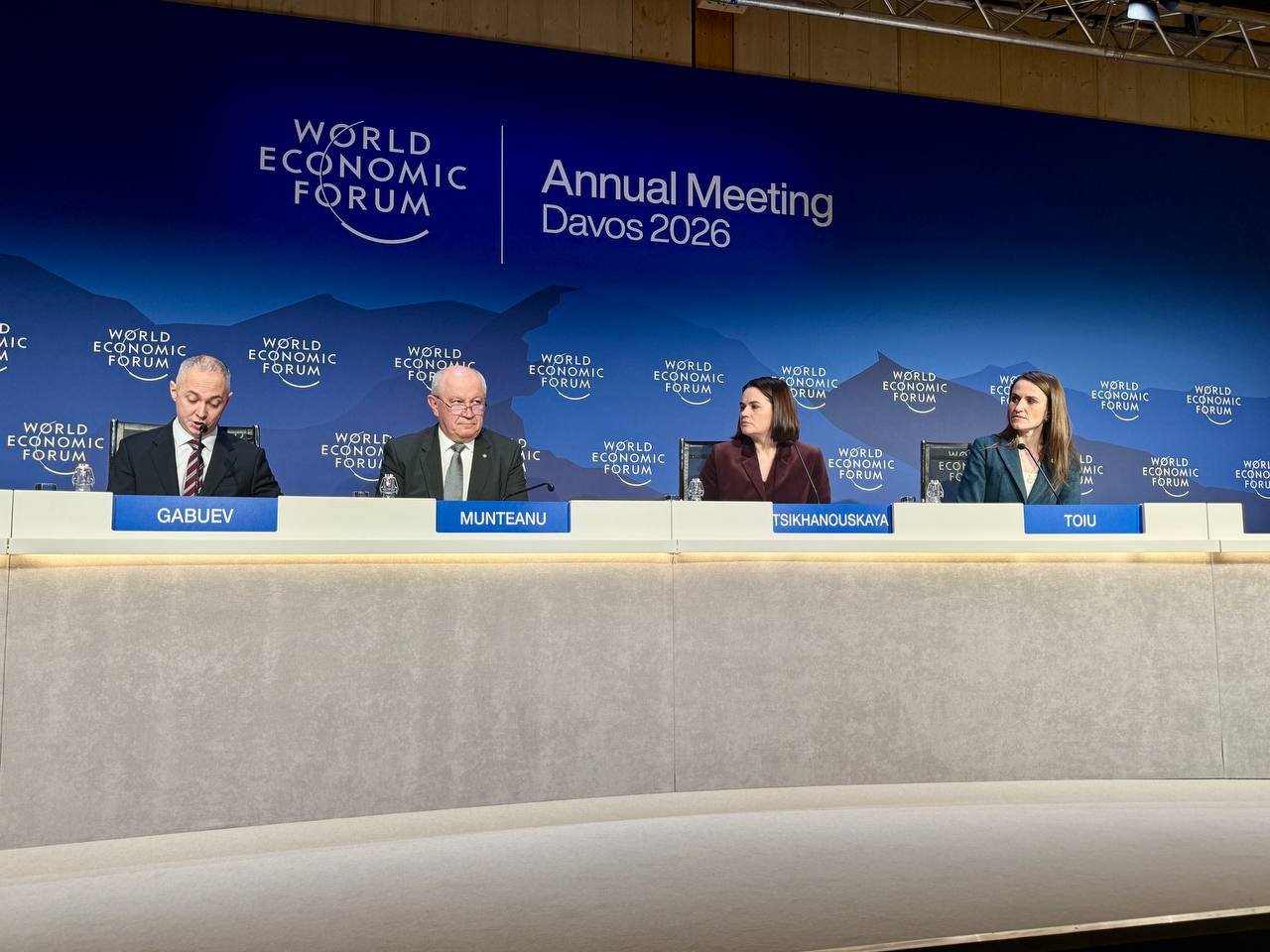




Sviatlana Tsikhanouskaya took part in the international briefing “Can Russia Sustain a Wartime Economy?”, which focused on the political and security consequences of Russia’s war economy for Europe. The briefing was also attended by the Prime Minister of Moldova, Alexandru Munteanu, the Minister of Foreign Affairs of Romania, Oana-Silvia Țoiu, and the Minister of Foreign Affairs of the Netherlands, David van Weel.
The participants discussed the effectiveness of sanctions, their impact on Russia’s ability to wage war, and the decisions facing European leaders.
In response to a question about the partial easing of US sanctions, Sviatlana Tsikhanouskaya noted that these sanctions are aimed at securing the release of people and may be eased if repression stops, while European Union sanctions have a much stronger impact and must remain in place until long-term changes are achieved, including an end to the regime’s involvement in the war, the restoration of Belarus’ sovereignty, and its transformation into a democratic country.
Sviatlana Tsikhanouskaya: “Without sanctions and international isolation, the Lukashenka regime would not have begun releasing political prisoners. It is not acting out of humanity – sanctions hurt, isolation hurts, and he understands that he has reached a dead end. That is why he is willing to hand over even his most dangerous opponents in exchange for relief. But lifting or substantially easing sanctions against the regime is dangerous, as it directly strengthens Russia: Belarus’ economy works for Russia’s war machine, Belarus is used as a route to circumvent sanctions, and its enterprises are involved in weapons production”.