



WHAT HAPPENED ON 13 DECEMBER 2025?
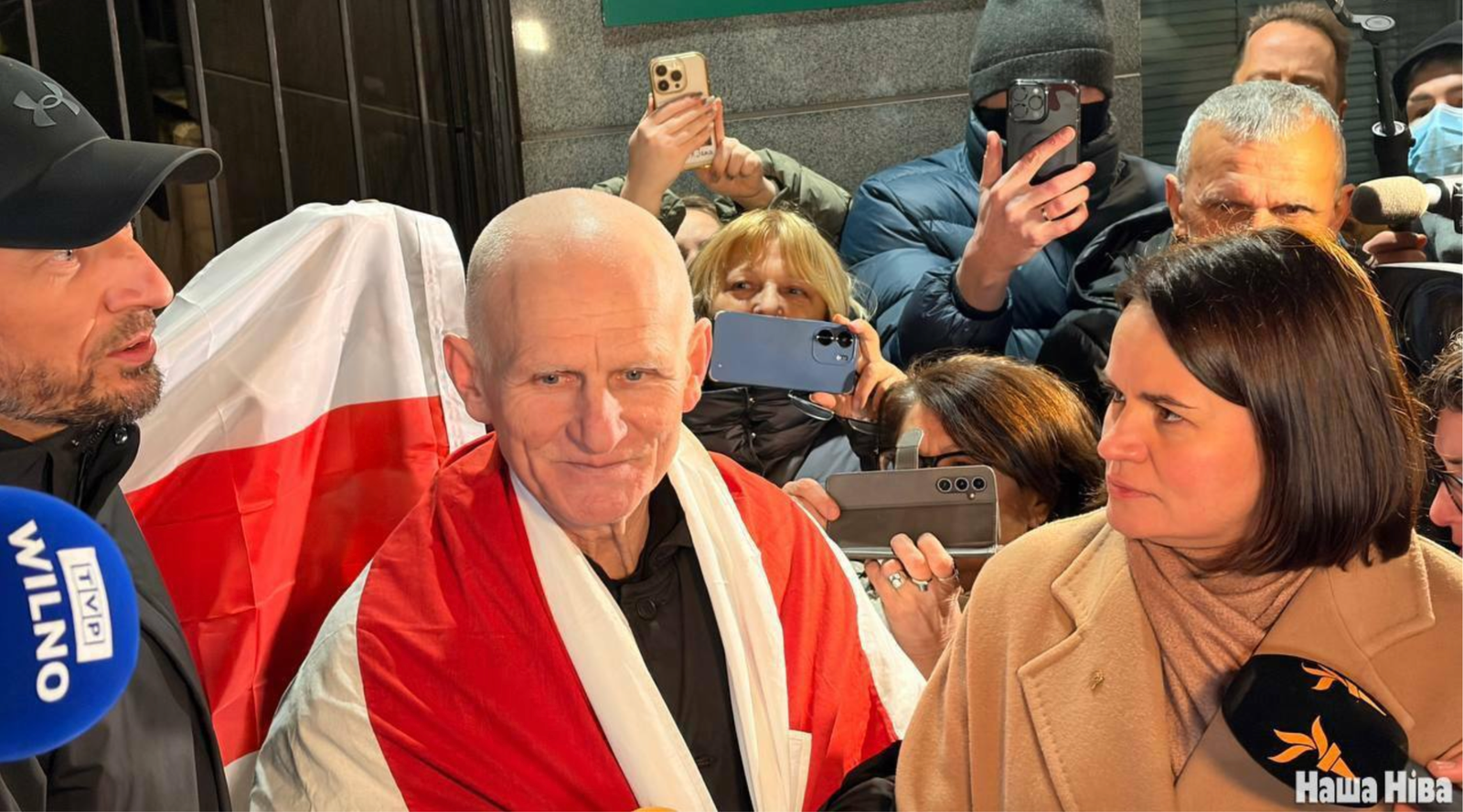
123 political prisoners have been released from Belarus prisons, including the most prominent figures of Belarus’ democratic movement: Nobel Peace Prize laureate Ales Bialiatski, key figures of the 2020 democratic movement Maria Kalesnikava and Viktar Babaryka, as well as journalists, civic activists, and human rights defenders imprisoned after the 2020 protests. All of them were transferred to Ukraine (115) or Lithuania (8). Their release was negotiated by John Coale, President Trump’s Special Envoy for Belarus, who visited Minsk. The day before, the U.S. Administration issued Belarus General License 13, allowing certain transactions with Belarusian potash companies. Belarusian President-Elect Sviatlana Tsikhanouskaya praised President Trump’s role in securing the release of political prisoners and also marked, that this became possible thanks to US diplomacy and European pressure.
WHY IS LUKASHENKA’S REGIME DOING THAT?
The regime may be driven by political and economic considerations in seeking sanctions relief. In recent years, the Belarusian economy has benefited from a surge in wartime demand linked to Russia’s invasion of Ukraine, but that boost is now fading, the economy is stagnating. Lukashenka may also want to break international isolation following lost elections in 2020 and Russian full-scale invasion against Ukraine, launched from Belarus territory. Symbolically, most released prisoners were sent to Ukraine rather than Lithuania, which had previously been the main destination.
WHERE ARE THE RELEASED PEOPLE NOW?
All the released Belarusians were forcibly deported. Eight of them were deported to Lithuania, including Ales Bialiatski and several foreign nationals. The remaining released prisoners were deported to Ukraine, with 20 of them expelled without valid passports or identity documents. After several days, the released individuals were transported to Warsaw, Poland (89 people), and Vilnius, Lithuania (20 people). 5 released Ukrainian citizens stayed in Ukraine. Viktar Babaryka and Maria Kalesnikava were transferred from Warsaw to Berlin, by invitation of German Government and will be legalizing there. Belarusian democratic forces remained in close coordination with the United States, Ukraine, Poland, and Lithuania to address and arrange outstanding logistical issues.
HOW CAN WE HELP THESE PEOPLE?
Many are in bad physical and mental health after years of isolation and need humanitarian support. The goal of democratic forces and partners is to ensure proper medical care, psychological rehabilitation, obtaining legal status, travel documents, and family reunification for those released. They receive the aid through Belarusian human rights initiatives, such as Viasna, Human Rights House, Volnyja; international organizations such as Freedom House, or the Lithuanian Red Cross.
The International Humanitarian Fund and the Victims Facility, EU-funded project, played a significant role. It’s crucial to provide more support for these initiatives so that they can more effectively assist these and future released political prisoners in their humanitarian needs.
HOW WERE BELARUSIAN DEMOCRATIC FORCES ENGAGED?
Sviatlana Tsikhanouskaya welcomed the prisoner releases and the humanitarian efforts of President Trump and his administration, while stressing that they would not have been possible without years of European pressure and sanctions. Her office remained in regular contact with the U.S. administration, John Coale (Special Envoy, Chris Smith (State Department, Andy Baker (WH) and consistently advocated for the release of political prisoners. During all four waves of releases, the Office of Sviatlana Tsikhanouskaya helped organize the reception of those freed and provided essential support.
SHOULD EUROPE ALSO LIFT SANCTIONS?
The recent releases clearly show that sanctions work. They are an effective tool to secure the release of people and to influence the regime’s behavior. U.S. sanctions linked to human rights violations can be used flexibly for humanitarian purposes, including freeing prisoners. European sanctions, which are in fact much stronger, however, serve a different goal: achieving irreversible, systemic change — democratic transition in Belarus, an end to repression, and weakening Russia’s war machine. We therefore urge our partners to maintain European and Ukraine sanctions until real, lasting change takes place in Belarus.
WHY POTASH IS SO IMPORTANT FOR LUKASHENKA?
Potash is one of key source of revenue for the Lukashenka regime. However, easing U.S. sanctions alone does not significantly change the regime’s economic situation, as European sanctions remain in force. For the regime, the most critical issue is not only access to buyers, but transit routes. Before the sanctions were imposed, the regime used ports in Lithuania for transit; however, it will now use ports in Russia, which will cost the regime several times more. Without the ability to ship potash through Lithuania or Poland, Likashenka’s regime remains cut off from its most efficient and profitable export channel.
DOES IT LEGITIMIZE LUKASHENKA?
One of the reasons Lukashenka’s regime released people is its attempt to break international isolation. However, these releases should be seen as part of President Trump’s humanitarian efforts — not as a political reset. We therefore call on European partners to refrain from high-level engagement with the regime, including sending ambassadors, until there is real political change in Belarus.
WHAT ARE NEXT STEPS?
John Coale already announced the plan to release all political prisoners in Belarus. We expect new releases in next months as negotiation between Washington and Minsk continues. We encourage the US to continue this humanitarian track that must lead to the release of all political prisoners (from 1,104 according to Viasna to 1,167 according to Dissidentby). We also believe that releasing people must be accompanied with a full cessation of repression and broad political amnesty, so no new political hostages are taken.
WHAT DID ALES BIALIATSKI TELL AFTER HIS RELEASE?
Among those released by the U.S. is Ales Bialiatski, the 2022 Nobel Peace Prize laureate. In his first public statements after release, Ales Bialiatski thanked US Administration but warned against the “trade of political prisoners.” He said: “with one hand the authorities release people, with the other they take in new political prisoners.” Bialiatski described the current penitentiary system as systematic, brutal, and deliberately dehumanizing, comparing it to Stalinist practices, where isolation, psychological pressure, arbitrary sentence extensions, and confiscation of personal writings are used to destroy dignity and identity. “Freeing prisoners is not enough,” he emphasized – ending repression itself is the only real solution.
WHAT WAS THE REACTION OF THE BELARUSIAN CIVIL SOCIETY?
The release sparked an extraordinary wave of public solidarity among Belarusians worldwide. Thousands of women painted their lips red in solidarity with Maria Kalesnikava, reviving one of the most powerful symbols of the 2020 protests. The release has given new energy and a major boost to the Belarusian freedom movement, and has brought hope for a new dynamic and more systemic change in the country.
WHAT CHANGES CAN WE EXPECT FOR THE DEMOCRATIC FORCES?
The democratic forces remain united around common goals: the release of political prisoners, the restoration of justice, and free and fair elections. The main democratic institutions remain in place (Office of Sviatlana Tsikhanouskaya, United Transitional Cabinet, Coordination Council). Newly released leaders such as Ales Bialiatski, Maria Kalesnikava, Viktar Babaryka, and Siarhei Tsikhanouski have publicly expressed support for Sviatlana Tsikhanouskaya. She remains the leader of the Belarusian democratic forces and the person who won the 2020 presidential election. As Ales Bialiatski stated: “I am a human rights activist, not a politician. And Tsikhanouskaya’s status as the Belarusian political leader is beyond doubt. Millions of citizens voted for her.” Following his release, Ales Bialiatski and Sviatlana Tsikhanouskaya held meetings with President Gitanas Nausėda and Speaker of the Lithuanian Parliament Juozas Olekas. Sviatlana Tsikhanouskaya has also held warm and constructive conversations with Maria Kalesnikava and Viktar Babaryka. It remains unclear whether Babaryka and Kalesnikava will return to active public politics. However, both have expressed a clear desire to work together with the democratic forces on the issue of political prisoners.