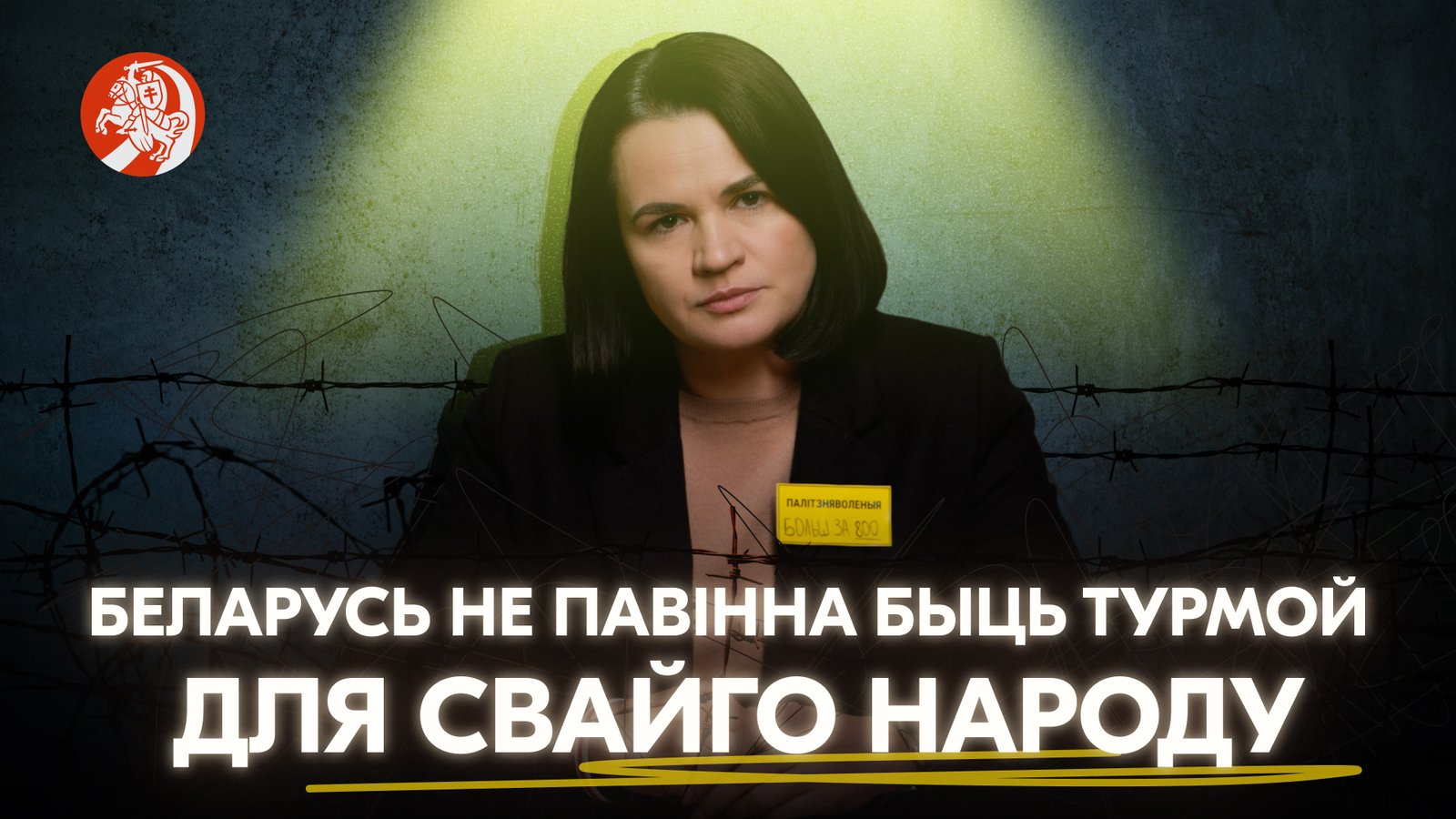




Sviatlana Tsikhanouskaya: “Five years ago, Vitold Ashurak became the first political prisoner to die in custody, in prison in Shklou. His death became a horrifying consequence of what the regime does to people behind bars. His death is a wound that has not healed. And this day has now become a day of solidarity with everyone who remains imprisoned.
More than 800 people — that is the number of recognized political prisoners in Belarus today. But the real figure is even higher. There are people we know nothing about, families who are afraid to speak out, and cases that never make the news.
Political prisoners are people with names, families, destinies, and dreams. They are punished on arbitrary charges — for a comment, a donation, a photograph, or silent dissent.
Every day in detention means deteriorating health, years separated from loved ones, sleeping under constant light, cold, poor-quality food, and a lack of proper medical care. And the yellow badge on the prison uniform marking you as ‘dangerous’.
My husband was forced to clean his cell four times a day. One former political prisoner recalled falling asleep while standing and nearly collapsing onto the concrete floor after spending five days without proper sleep. Stsiapan Latypau has made three suicide attempts. And how many such stories will we never learn about?
I know what it means to wait for a loved one to come home from prison. To live between hope and fear, and still keep going. Your children are waiting for you. You have no right to give up. My husband spent more than five years behind bars, and I remember every single day of that wait — the fear brought by news about transfers, punishment cells, and missing letters. I share this pain with thousands of Belarusian families.
More than a year ago, thanks to the United States’ diplomacy, international pressure, and our joint efforts, releases began, and we sincerely rejoice for everyone freed.
This also happened because we did not remain silent. For all these years, together with you, we worked with the international community and told the world about those whom the regime wanted hidden from view. We named names, raised assistance, and wrote letters. Human rights defenders, families of political prisoners, journalists, diplomats, volunteers, and every caring person — all of us played our part.
But leaving prison does not yet mean truly regaining freedom. Many continue living under surveillance and numerous restrictions. Many were forcibly deported abroad and left without documents. The prison term may be over, but the persecution is not. They need support and attention no less than those who remain behind bars.
There should not be a single political prisoner in Belarus. Not one. Over these years, we have almost become accustomed to hundreds of names on the list of political prisoners, daily detentions, and reports of torture, as though this were a new normal. But this is not normal. It must not become normal.
We will continue fighting until every person is free.
Belarus must not be a prison for its own people”.